Cellular automata
Cellular Automata methods
For queries about this topic, contact Richard Watson.
View the calendar of events relating to this topic.
Projects

An Investigation into the Cascade Effect of Mergers on the Global Financial Markets
Seth Bullock, Antonella Ianni (Investigators), Camillia Zedan
An investigation into the external effects that horizontal mergers have on the interconnected global markets.
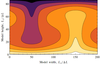
Can the principle of Maximum Entropy Production be used to predict the steady states of a Rayleigh-Bernard convective system?
Kevin Oliver, Iain Weaver, James Dyke (Investigators)
The principle of Maximum Entropy Production (MEP) has been successfully used to reproduce the steady states of a range of non-equilibrium systems. Here we investigate MEP and maximum heat flux extremum principles directly via the simulation of a Rayleigh-Bérnard convective system implemented as a lattice gas model.
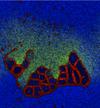
Cellular Automata Modelling of Membrane Formation and Protocell Evolution
Seth Bullock (Investigator), Stuart Bartlett
We simulated the meso-level behaviour of lipid-like particles in a range of chemical and physical environments. Self-organised protocellular structures can be shown to emerge spontaneously in systems with random, homogeneous initial conditions. Introducing an additional 'toxic' particle species and an associated set of synthesis reactions produced a new set of ecological behaviours compared to the original model of Ono and Ikegami.
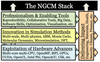
Centre for Doctoral Training in Next Generation Computational Modelling
Hans Fangohr, Ian Hawke, Peter Horak (Investigators), Susanne Ufermann Fangohr, Thorsten Wittemeier, Kieran Selvon, Alvaro Perez-Diaz, David Lusher, Ashley Setter, Emanuele Zappia, Hossam Ragheb, Ryan Pepper, Stephen Gow, Jan Kamenik, Paul Chambers, Robert Entwistle, Rory Brown, Joshua Greenhalgh, James Harrison, Jonathon Waters, Ioannis Begleris, Craig Rafter
The £10million Centre for Doctoral Training was launched in November 2013 and is jointly funded by EPSRC, the University of Southampton, and its partners.
The NGCM brings together world-class simulation modelling research activities from across the University of Southampton and hosts a 4-year doctoral training programme that is the first of its kind in the UK.
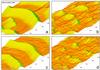
Discrete ECogeomorphic Aeolian Landscape (DECAL) modelling
Joanna Nield (Investigator)
DECAL is a cellular automaton based model which incorporated mutual feedback processes between geomorphic forcing and ecological growth to investigate fundamental controls, self-organising and non-linear behaviour in semi-arid aeolian dune environments. This project explores landscape evolution and disturbance response, developing a phase-space in which dune fields can be quantified.
Multiscale Modelling of Cellular Calcium Signalling
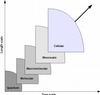
Hans Fangohr, Jonathan Essex (Investigators), Dan Mason
Calcium ions play a vitally important role in signal transduction and are key to many cellular processes including muscle contraction and cell apoptosis (cell death). This importance has made calcium an active area in biomedical science and mathematical modelling.
Origins of Evolvability
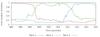
Richard Watson, Markus Brede (Investigators), William Hurndall
This project examined the putative evolvability of a Lipid World model of fissioning micelles. It was demonstrated that the model lacked evlovability due to poor heritability. Explicit structure for micelles was introduced along with a spatially localised form of catalysis which increased the strength of selection as coupling between potential chemical units of heredity were reduced.
Renormalisation group approach to 1D cellular automata with large updating neighbourhoods
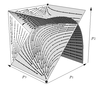
Iain Weaver, Adam Prugel-Bennett (Investigators)
We study self-similarity in one-dimensional probabilistic cellular automata (PCA) by applying a real-space renormalisation technique to PCA with increasingly large updating neighbourhoods. By studying the flow about the critical point of the renormalisation, we may produce estimates of the spatial scaling properties of critical PCA.
Sediment Transfer and Erosion on Large Alluvial Rivers (STELAR-S2S)
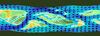
Stephen Darby, Julian Leyland, Christopher Hackney (Investigators)
STELAR-S2S will provide the first comprehensive quantification of autogenic and climatic controls on riverine sediment fluxes for one of the world's largest rivers (the Mekong), leading to new generic understanding of the relationships between climatic variability, fluvial processes and sediment flux to deltaic zones and the ocean.
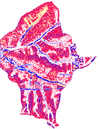
Simulating Hydro-geomorphic Changes in European Climate Hotspots
John Dearing (Investigator), Ying Wang
This project will simulate the behaviour of hydro-geomorphological processes in a fluvial system over decadal timescales is an important basis for research on catchment environmental management, especially with regards climate changes and human impacts on fluvial system.
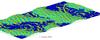
Surface moisture-induced feedback in aeolian environments
Joanna Nield (Investigator)
This project explores the importance of surface moisture for aeolian processes, particularly feedback between surface moisture and bedform sedimentation and migration.
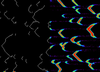
The application of automated pattern metrics to surface moisture influences on modelled dune field development
Robin Wilson, Joanna Nield (Investigators)
Areas of sand dunes (known as dunefields) develop complex patterns over time. These are influenced by both the past and present environmental conditions, including surface moisture, vegetation distribution and human impact. This project develops a method of automated pattern analysis which allow the patterns produced by a large number of sand dune evolution simulations (performed using the DECAL model) to be quantified over time.
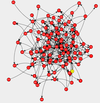
The Endogenous Formation of Economic Networks
Antonella Ianni, Seth Bullock (Investigators), Camillia Zedan
An investigation into endogenous network formation using a simple agent-based approach.
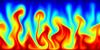
The Maximum Entropy Production Principle and Natural Convection
Seth Bullock, James Dyke (Investigators), Stuart Bartlett
In this project I wanted to perform some tests of the so-called Maximum Entropy Production Principle (MEPP) in the context of buoyancy-driven convection in a system with negative feedback boundary conditions.
The Origin of Aeolian Dunes (TOAD)
Joanna Nield (Investigator)
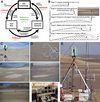
The overall aim of this project is to understand the genesis and subsequent evolution of aeolian early stage bedforms by quantifying for the very first time the role and importance of flow, transport and surface feedbacks in the initiation and emergence of dunes. This project offers the genuine prospect of surmounting arguably the major enduring research question within aeolian geomorphology, leading to broader insights which will offer knowledge benefits for sedimentary landform studies as a whole.

Traveling and movement during European Late Prehistory
Patricia Murrieta Flores
This project has as main purpose to investigate through spatial analysis and computational modelling the variables and factors that influenced how humans traveled during prehistoric times.
One of the principal objectives will be to clarify the role that certain landscape elements (i.e megalithic monuments) played in terrestrial navigation and territorial definition.
This project is supported by CONACYT (Mexico) as a doctoral research by Patricia Murrieta-Flores under the supervision of Dr. David Wheatley (University of Southampton) and Dr. Leonardo Garcia Sanjuan (University of Seville, Spain). It also counts with the collaboration of Dr. Dimitrij Mlekuz (Gent University, Belgium).
People
 Seth Bullock
Professor, Electronics and Computer Science (FPAS)
 Stephen Darby
Professor, Geography (FSHS)
 John Dearing
Professor, Geography (FSHS)
 Jonathan Essex
Professor, Chemistry (FNES)
 Hans Fangohr
Professor, Engineering Sciences (FEE)
 Peter Horak
Reader, Optoelectronics Research Centre
 Adam Prugel-Bennett
Reader, Electronics and Computer Science (FPAS)
 Markus Brede
Senior Lecturer, Electronics and Computer Science (FPAS)
 Antonella Ianni
Senior Lecturer, Social Sciences (FSHS)
Julian LeylandSenior Lecturer, Geography (FSHS)
 Joanna Nield
Senior Lecturer, Geography (FSHS)
 Richard Watson
Senior Lecturer, Electronics and Computer Science (FPAS)
 James Dyke
Lecturer, Electronics and Computer Science (FPAS)
 Ian Hawke
Lecturer, Mathematics (FSHS)
 Kevin Oliver
Lecturer, National Oceanography Centre (FNES)
 Jacek Dziedzic
Research Fellow, Chemistry (FNES)
 Christopher Hackney
Research Fellow, Geography (FSHS)
 Robin Wilson
Research Fellow, Geography (FSHS)
 David Arden
Postgraduate Research Student, Electronics and Computer Science (FPAS)
 Jordi Arranz
Postgraduate Research Student, Electronics and Computer Science (FPAS)
 Stuart Bartlett
Postgraduate Research Student, Electronics and Computer Science (FPAS)
 Ioannis Begleris
Postgraduate Research Student, Engineering Sciences (FEE)
 Harry Beviss
Postgraduate Research Student, Electronics and Computer Science (FPAS)
 Rory Brown
Postgraduate Research Student, Civil Engineering & the Environment (FEE)
 Paul Chambers
Postgraduate Research Student, Engineering Sciences (FEE)
 Robert Entwistle
Postgraduate Research Student, Engineering Sciences (FEE)
 Greg Fisher
Postgraduate Research Student, Electronics and Computer Science (FPAS)
 Stephen Gow
Postgraduate Research Student, Engineering Sciences (FEE)
 Jonathan Gray
Postgraduate Research Student, Social Sciences (FSHS)
 Joshua Greenhalgh
Postgraduate Research Student, Engineering Sciences (FEE)
 Chris Hackney
Postgraduate Research Student, Geography (FSHS)
 James Harrison
Postgraduate Research Student, Engineering Sciences (FEE)
 William Hurndall
Postgraduate Research Student, Electronics and Computer Science (FPAS)
 Adam Jackson
Postgraduate Research Student, Electronics and Computer Science (FPAS)
Konstantinos KouvarisPostgraduate Research Student, Electronics and Computer Science (FPAS)
 David Lusher
Postgraduate Research Student, Engineering Sciences (FEE)
 Patricia Murrieta Flores
Postgraduate Research Student, Humanities (FH)
 Alvaro Perez-Diaz
Postgraduate Research Student, Engineering Sciences (FEE)
 Lyuboslav Petrov
Postgraduate Research Student, Electronics and Computer Science (FPAS)
 David Potts
Postgraduate Research Student, Humanities (FH)
 Craig Rafter
Postgraduate Research Student, Engineering Sciences (FEE)
 Hossam Ragheb
Postgraduate Research Student, Engineering Sciences (FEE)
 Joe Reed
Postgraduate Research Student, Electronics and Computer Science (FPAS)
 Álvaro Ruiz-Serrano
Postgraduate Research Student, Chemistry (FNES)
 Kieran Selvon
Postgraduate Research Student, Engineering Sciences (FEE)
 Ashley Setter
Postgraduate Research Student, Engineering Sciences (FEE)
 Nathan Smith
Postgraduate Research Student, Electronics and Computer Science (FPAS)
 Massimo Stella
Postgraduate Research Student, Electronics and Computer Science (FPAS)
 Nick Synes
Postgraduate Research Student, Electronics and Computer Science (FPAS)
Ying WangPostgraduate Research Student, Geography (FSHS)
 Jonathon Waters
Postgraduate Research Student, Engineering Sciences (FEE)
 Iain Weaver
Postgraduate Research Student, Electronics and Computer Science (FPAS)
 Thorsten Wittemeier
Postgraduate Research Student, Engineering Sciences (FEE)
 Emanuele Zappia
Postgraduate Research Student, Engineering Sciences (FEE)
 Camillia Zedan
Postgraduate Research Student, Electronics and Computer Science (FPAS)
 Elisabeth zu-Erbach-Schoenberg
Postgraduate Research Student, Management (FBL)
 Petrina Butler
Administrative Staff, Research and Innovation Services
 Susanne Ufermann Fangohr
Administrative Staff, Civil Engineering & the Environment (FEE)
 Jan Kamenik
Alumnus, University of Southampton
 Dan Mason
Alumnus, University of Southampton
 Daniel Pope
External Member, Mauve Internet Ltd.
 Mark Vousden
External Member, University of Southampton
Daisuke SasakiNone, None