Distributed computing
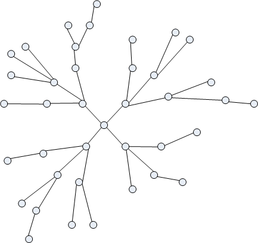
Distributed computing involves spreading a computational task across multiple processors, nodes, or agents, each with some degree of autonomy. The idea is that "many hands make light work", and there can also be advantages in terms of robustness when compared to traditional centralized architectures. Message-passing systems are employed so that nodes can communicate with each other as required, but excessive levels of communication will negate the speed advantage of the distributed computing approach. Major research challenges include the design of algorithms that effectively break a problem into sub-tasks that can be worked on with a minimum of inter-node communication, and optimizing the way in which sub-tasks are allocated to particular nodes.
For queries about this topic, contact Jason Noble.
View the calendar of events relating to this topic.
Projects
Body Forces in Particle Suspensions in Turbulence
Gabriel Amine-Eddine (Investigator)
The behaviour of multiphase flows is of primary importance in many engineering applications. In the past, experimental observations have provided many researchers with the ability to understand and probe the phenomena and physical processes occurring in such flows. With advancements in modern day computational power, we now have the ability to gain an even greater wealth of knowledge, from what used to be a physical experiment, is now a virtual simulation.
Amine-Eddine, G.H. (2015) Body forces in particle suspensions in turbulence. University of Southampton, Faculty of Engineering and the Environment, Doctoral Thesis , 283pp.
Data Science and HPC
Are Data science and HPC really different fields or are people just repackaging old ideas with new words.
Desiging Near-Capacity Quantum Error Correction Codes
Lajos Hanzo (Investigator), Zunaira Babar
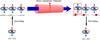
Design efficient quantum error correction codes to correct the errors encountered in a quantum transmission; thus, increasing reliability and robustness of the future quantum systems.
Optical Characterisation of Black Silicon for Photovoltaics Using the Finite Element Method
Jack Tyson (Investigator)
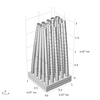
Here we present a novel method of simulating the reflectance spectra of black silicon solar cells using the finite element method. Designed in COMSOL Multiphysics is a new set of algorithm-controlled-geometries rendering a vast array of different structural permutations of silicon nanowires. Our model focused on the variation of this geometry within customisable predefined conditions in large output quantities, collated and averaged to reliably determine the reflectance of an entire black silicon solar cell.
Porcupine Basin Project
Louise Watremez
The Porcupine Basin is a narrow failed rift, offshore SW Ireland, featuring extreme crustal thinning. The M61/2 survey (May 2004, T. Reston and B. O'Reilly) allowed for the acquisition of seismic refraction data across and along the basin, along 5 transects. The processing of the data along these transects will give us information about the crustal structure across the basin, faulting due to the crustal extension, nature of the upper-mantle, etc. This project is funded by Petroleum Infrastructure Programme (PIP).
Pushing the Envelope of Planetary Formation and Evolution Simulations
Peter Bartram
A full understanding of the formation and the early evolution of the Solar System and extrasolar planetary systems ranks among natural science's grand challenges, and at present, even the dominant processes responsible for generating the observed planetary architecture remain elusive.
Software Sustainability Institute
Simon Hettrick (Investigator)
A national facility for cultivating world-class research through software
Software helps researchers to enhance their research, and improve the speed and accuracy of their results. The Software Sustainability Institute can help you introduce software into your research or improve the software you already use.
The Institute is based at the universities of Edinburgh, Manchester, Oxford and Southampton, and draws on a team of experts with a breadth of experience in software development, project and programme management, research facilitation, publicity and community engagement.
We help people build better software, and we work with researchers, developers, funders and infrastructure providers to identify key issues and best practice in scientific software.
Today's Computation Enabling Tomorrow's Seamless Communication
Lajos Hanzo (Investigator), Varghese Thomas
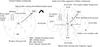
Radio Over Fibre (ROF) is a communication technique that aims to gainfully amalgamate the benefits of optical and wireless communication, while keeping the system cost low. This technique would support the next generation of wireless services.
µ-VIS Computed Tomography Centre
Ian Sinclair, Richard Boardman, Dmitry Grinev, Philipp Thurner, Simon Cox, Jeremy Frey, Mark Spearing, Kenji Takeda (Investigators)
A dedicated centre for computed tomography (CT) at Southampton, providing complete support for 3D imaging science, serving Engineering, Biomedical, Environmental and Archaeological Sciences. The centre encompasses five complementary scanning systems supporting resolutions down to 200nm and imaging volumes in excess of one metre: from a matchstick to a tree trunk, from an ant's wing to a gas turbine blade.
People
 Simon Cox
Professor, Engineering Sciences (FEE)
 Graeme Day
Professor, Chemistry (FNES)
 Jeremy Frey
Professor, Chemistry (FNES)
 Lajos Hanzo
Professor, Electronics and Computer Science (FPAS)
 John Shrimpton
Professor, Engineering Sciences (FEE)
 Ian Sinclair
Professor, Engineering Sciences (FEE)
 Mark Spearing
Professor, Engineering Sciences (FEE)
 Gwenael Gabard
Lecturer, Institute of Sound & Vibration Research (FEE)
 Denis Kramer
Lecturer, Engineering Sciences (FEE)
 Philipp Thurner
Lecturer, Engineering Sciences (FEE)
 Richard Boardman
Senior Research Fellow, Engineering Sciences (FEE)
Felipe Alves PortelaResearch Fellow, Engineering Sciences (FEE)
Petros BogiatzisResearch Fellow, Ocean & Earth Science (FNES)
 Aleksander Dubas
Research Fellow, Engineering Sciences (FEE)
Btissam Er-RahmadiResearch Fellow, Management (FBL)
Dmitry GrinevResearch Fellow, Engineering Sciences (FEE)
 Rob Mills
Research Fellow, Electronics and Computer Science (FPAS)
Louise WatremezResearch Fellow, Ocean & Earth Science (FNES)
 Gabriel Amine-Eddine
Postgraduate Research Student, Engineering Sciences (FEE)
 Jordi Arranz
Postgraduate Research Student, Electronics and Computer Science (FPAS)
Peter BartramPostgraduate Research Student, University of Southampton
 Jamie Caldwell
Postgraduate Research Student, Engineering Sciences (FEE)
 Alexandra Diem
Postgraduate Research Student, Engineering Sciences (FEE)
 Samuel Diserens
Postgraduate Research Student, Engineering Sciences (FEE)
Nicholas HillPostgraduate Research Student, Electronics and Computer Science (FPAS)
 Leo Jofeh
Postgraduate Research Student, Electronics and Computer Science (FPAS)
Konstantinos KouvarisPostgraduate Research Student, Electronics and Computer Science (FPAS)
 Justin Lovegrove
Postgraduate Research Student, Mathematics (FSHS)
 Neil O'Brien
Postgraduate Research Student, Engineering Sciences (FEE)
 Lyuboslav Petrov
Postgraduate Research Student, Electronics and Computer Science (FPAS)
 Lenka Pitonakova
Postgraduate Research Student, University of Southampton
 Daniel Powell
Postgraduate Research Student, Engineering Sciences (FEE)
 Matthew Spraggs
Postgraduate Research Student, Electronics and Computer Science (FPAS)
Jack TysonPostgraduate Research Student, Electronics and Computer Science (FPAS)
Koen van MierloPostgraduate Research Student, Engineering Sciences (FEE)
George WinstonePostgraduate Research Student, Physics & Astronomy (FPAS)
 Davide Zilli
Postgraduate Research Student, Electronics and Computer Science (FPAS)
Jess JonesTechnical Staff, iSolutions
 Elena Vataga
Technical Staff, iSolutions
 Petrina Butler
Administrative Staff, Research and Innovation Services
 Arthur Lugtigheid
Alumnus, Psychology (FSHS)
Kieren LythgowAlumnus, Health Protection Agency
 Kenji Takeda
Alumnus, Engineering Sciences (FEE)
 Marijan Beg
External Member, Imperial College London
 Ian Bush
External Member, NAG Ltd, Oxford
Mario OrsiExternal Member, Queen Mary University of London
Zunaira BabarNone, None
Simon HettrickNone, None
Daisuke SasakiNone, None
Varghese ThomasNone, None