Game Theory
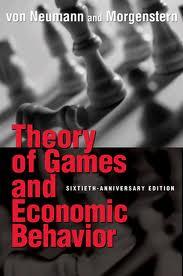
Game theory is a branch of mathematics that describes rational or optimal conduct in strategic situations, i.e., situations in which more than one agent is involved and the payoff for a particular strategy employed by one agent is dependent on what the other agent (or agents) will do. As such, game theory has been particularly useful in economics, evolutionary biology, ecology, and artificial intelligence.
For queries about this topic, contact Jason Noble.
View the calendar of events relating to this topic.
Projects

Amorphous Computation, Random Graphs and Complex Biological Networks
Seth Bullock (Investigator)
This interdisciplinary research collaboration arose within the Simple Models of Complex Networks research cluster funded by the EPSRC www.epsrca.ac.uk through the Novel Computation Initiative. Here, leading groups from the Universities of Leeds, Sheffield, Nottingham, Southampton, Royal Holloway and King’s College and industrial partners BT are brought together for the first time to develop novel amorphous computation methods based on the theory of random graphs.

An Investigation into the Cascade Effect of Mergers on the Global Financial Markets
Seth Bullock, Antonella Ianni (Investigators), Camillia Zedan
An investigation into the external effects that horizontal mergers have on the interconnected global markets.

Bayesian Agents as Models for the Disclosure Behaviour of Pregnant Drinkers
Seth Bullock, Jakub Bijak (Investigators), Jonathan Gray
Examining the feasibility of signalling games, played by Bayesian decision theoretic agents as a model for the disclosure of drinking behaviour by pregnant women to their midwives.

CRISIS – Complexity Research Initiative for Systemic InstabilitieS
Frank McGroarty (Investigator), Bob De Caux
A new approach to modelling and understanding financial system and macroeconomic risk and instability

Evolving Behaviour-Dependent Strategies in Agent Negotiations
Enrico Gerding, Markus Brede (Investigators), Darius Pepe Falahat
We use genetic algorithms to evolve trading strategies for iterative bilateral negotiations between buyers and sellers. In contrast to previous work we evolve purely reactive strategies that base decisions on memories of behaviour in previous negotiation rounds. A paper was written on this research and was published in the proceedings for the European Conference on Artificial Life 2013.
Network Analysis of Roman Transport Routes in the Imperial Roman Mediterranean
David Potts
This research is designed to explore the nature of the relationships between Portus, Rome, and other selected ports in the Mediterranean and to establish patterns and the changing nature of trading networks derived from the distribution of known Roman artefacts.

Spatial Mobility in the Formation of Agent-Based Economic Networks
Antonella Ianni, Seth Bullock (Investigators), Camillia Zedan
An investigation into the effect of spatial mobility on endogenous economic network formation.
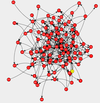
The Endogenous Formation of Economic Networks
Antonella Ianni, Seth Bullock (Investigators), Camillia Zedan
An investigation into endogenous network formation using a simple agent-based approach.

The Role of Information in Price Discovery
Antonella Ianni, Seth Bullock (Investigators), Camillia Zedan
The recent economic crisis has highlighted a continued vulnerability and lack of understanding in the financial markets. In order to overcome this, many believe that current market models must be improved. Recently, a trend towards agent-based modelling has emerged. Viewing the economy as a complex system is beginning to be seen as key to explaining certain market characteristics that were originally considered anomalies.
One of the fundamental assumptions in economics is that of information efficiency: that the price of a stock reflects its worth, that all possible information about a security is publicly known, and that any changes to price take place instantaneously. In reality, however, this is not the case.
This project considers the use of agents in modelling economic systems and demonstrates the effect of information levels on price discovery using a simple market simulation.

You Can Chop Off My Head If You'll Let Me Return the Blow: Being a Game Theory Primer for the Non-technical Audience.
Jason Noble (Investigator), Lewys Brace
Game theory is a subject area that has, since it’s conception, become influential in a number of fields, ranging from its ‘stomping grounds’ in economics, through to evolutionary biology.
The aim of this paper was to provide the reader with a theoretical understanding of the basic concepts that one often encounters within the wider scientific literature, in a non-technical manner. To this end, this paper discussed its subject matter with the aid of examples that most people would be familiar with, and which do not require any specialist knowledge to interpret. This was deemed to be a useful way in which to develop an understanding of these concepts and their significance.
People
 Jakub Bijak
Professor, Social Sciences (FSHS)
 Seth Bullock
Professor, Electronics and Computer Science (FPAS)
 Frank McGroarty
Professor, Management (FBL)
 Markus Brede
Senior Lecturer, Electronics and Computer Science (FPAS)
 Antonella Ianni
Senior Lecturer, Social Sciences (FSHS)
Mohamed BakoushLecturer, Management (FBL)
 Denis Kramer
Lecturer, Engineering Sciences (FEE)
Btissam Er-RahmadiResearch Fellow, Management (FBL)
 Jason Noble
Research Fellow, Electronics and Computer Science (FPAS)
 Jordi Arranz
Postgraduate Research Student, Electronics and Computer Science (FPAS)
 Alice Ball
Postgraduate Research Student, Electronics and Computer Science (FPAS)
 Harry Beviss
Postgraduate Research Student, Electronics and Computer Science (FPAS)
 Ash Booth
Postgraduate Research Student, Electronics and Computer Science (FPAS)
 Lewys Brace
Postgraduate Research Student, Electronics and Computer Science (FPAS)
Paul CrossPostgraduate Research Student, Engineering Sciences (FEE)
 Bob De Caux
Postgraduate Research Student, Electronics and Computer Science (FPAS)
Caroline DuignanPostgraduate Research Student, Biological Sciences (FNES)
 Darius Pepe Falahat
Postgraduate Research Student, Electronics and Computer Science (FPAS)
 Greg Fisher
Postgraduate Research Student, Electronics and Computer Science (FPAS)
 Jonathan Gray
Postgraduate Research Student, Social Sciences (FSHS)
 Tom Hebbron
Postgraduate Research Student, Electronics and Computer Science (FPAS)
 Adam Jackson
Postgraduate Research Student, Electronics and Computer Science (FPAS)
Konstantinos KouvarisPostgraduate Research Student, Electronics and Computer Science (FPAS)
 Vincent Marmion
Postgraduate Research Student, Psychology (FSHS)
 Patricia Murrieta Flores
Postgraduate Research Student, Humanities (FH)
 Lyuboslav Petrov
Postgraduate Research Student, Electronics and Computer Science (FPAS)
 David Potts
Postgraduate Research Student, Humanities (FH)
 Álvaro Ruiz-Serrano
Postgraduate Research Student, Chemistry (FNES)
 James Snowdon
Postgraduate Research Student, Civil Engineering & the Environment (FEE)
 Simon Tudge
Postgraduate Research Student, Electronics and Computer Science (FPAS)
 Camillia Zedan
Postgraduate Research Student, Electronics and Computer Science (FPAS)
 Elisabeth zu-Erbach-Schoenberg
Postgraduate Research Student, Management (FBL)
Jess JonesTechnical Staff, iSolutions
 Petrina Butler
Administrative Staff, Research and Innovation Services
 Richard Edwards
Alumnus, University of New South Wales, Australia
 Arthur Lugtigheid
Alumnus, Psychology (FSHS)
Alkin NasufAlumnus, Engineering Sciences (FEE)
 Mark Vousden
External Member, University of Southampton
Enrico GerdingNone, None
Daisuke SasakiNone, None