Cloud computing
Microsoft Windows Azure provides users with the ability to provision virtual machines, called workers. A worker can be configured to run any code or application supported by the base operating system (Windows Server 2008 R2), other operating systems are available and there are administrator restrictions. Our experience has shown that provisioning a worker takes 15min--30min, but once provisioned it is possible to upgrade the worker in under 5min.
Provisioning a worker is managed by the Azure fabric and involves building a virtual machine, allocating hardware, booting the operating system and starting the user-defined code. Upgrading a worker involves halting the user-defined code, loading new code and restarting the execution, hence it is much quicker than provisioning. Workers come in various sizes and the costs are proportional to capability. We often utilise small workers, but extra large workers with eight times the RAM and CPU capability are available. Currently cloud computing does not support low latency networking such as Myrinet or Infiniband, so often each worker is treated as a standalone piece of computation. Windows Azure provides persistent scalable storage in the form of blob storage which can be accessed by workers. As each worker is independent we are using Azure message queues to coordinate tasks between workers.
We are using Windows Azure for:
- Space Situational Awareness
- accelerating the development of algorithms, for example a meshless local weak-strong form method (MLWSFM) for computational electromagnetics
- and various Windows Phone 7 (WP7) related projects
For queries about this topic, contact Steven Johnston.
View the calendar of events relating to this topic.
Projects
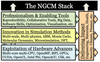
Centre for Doctoral Training in Next Generation Computational Modelling
Hans Fangohr, Ian Hawke, Peter Horak (Investigators), Susanne Ufermann Fangohr, Thorsten Wittemeier, Kieran Selvon, Alvaro Perez-Diaz, David Lusher, Ashley Setter, Emanuele Zappia, Hossam Ragheb, Ryan Pepper, Stephen Gow, Jan Kamenik, Paul Chambers, Robert Entwistle, Rory Brown, Joshua Greenhalgh, James Harrison, Jonathon Waters, Ioannis Begleris, Craig Rafter
The £10million Centre for Doctoral Training was launched in November 2013 and is jointly funded by EPSRC, the University of Southampton, and its partners.
The NGCM brings together world-class simulation modelling research activities from across the University of Southampton and hosts a 4-year doctoral training programme that is the first of its kind in the UK.

Directing magnetic skyrmion traffic flow with nanoscale patterning.
Hans Fangohr (Investigator), Mark Vousden
Skyrmions in magnetic nanostructures may lead to new data storage technologies. Appropriate simulation methodologies are developed and applied.
Pushing the Envelope of Planetary Formation and Evolution Simulations
Peter Bartram
A full understanding of the formation and the early evolution of the Solar System and extrasolar planetary systems ranks among natural science's grand challenges, and at present, even the dominant processes responsible for generating the observed planetary architecture remain elusive.
Software Sustainability Institute
Simon Hettrick (Investigator)
A national facility for cultivating world-class research through software
Software helps researchers to enhance their research, and improve the speed and accuracy of their results. The Software Sustainability Institute can help you introduce software into your research or improve the software you already use.
The Institute is based at the universities of Edinburgh, Manchester, Oxford and Southampton, and draws on a team of experts with a breadth of experience in software development, project and programme management, research facilitation, publicity and community engagement.
We help people build better software, and we work with researchers, developers, funders and infrastructure providers to identify key issues and best practice in scientific software.
People
 Hans Fangohr
Professor, Engineering Sciences (FEE)
 Peter Horak
Reader, Optoelectronics Research Centre
 Paul Skipp
Reader, Biological Sciences (FNES)
 Ian Hawke
Lecturer, Mathematics (FSHS)
 Felipe Alves Portela
Research Fellow, Engineering Sciences (FEE)
Petros BogiatzisResearch Fellow, Ocean & Earth Science (FNES)
Peter BartramPostgraduate Research Student, University of Southampton
 Ioannis Begleris
Postgraduate Research Student, Engineering Sciences (FEE)
 Rory Brown
Postgraduate Research Student, Civil Engineering & the Environment (FEE)
 Paul Chambers
Postgraduate Research Student, Engineering Sciences (FEE)
 Robert Entwistle
Postgraduate Research Student, Engineering Sciences (FEE)
 Stephen Gow
Postgraduate Research Student, Engineering Sciences (FEE)
 Joshua Greenhalgh
Postgraduate Research Student, Engineering Sciences (FEE)
 James Harrison
Postgraduate Research Student, Engineering Sciences (FEE)
 Joshua Jeeson Daniel
Postgraduate Research Student, Engineering Sciences (FEE)
 Justin Lovegrove
Postgraduate Research Student, Mathematics (FSHS)
 David Lusher
Postgraduate Research Student, Engineering Sciences (FEE)
 Alvaro Perez-Diaz
Postgraduate Research Student, Engineering Sciences (FEE)
 Craig Rafter
Postgraduate Research Student, Engineering Sciences (FEE)
 Hossam Ragheb
Postgraduate Research Student, Engineering Sciences (FEE)
 Kieran Selvon
Postgraduate Research Student, Engineering Sciences (FEE)
 Ashley Setter
Postgraduate Research Student, Engineering Sciences (FEE)
 Jonathon Waters
Postgraduate Research Student, Engineering Sciences (FEE)
 Thorsten Wittemeier
Postgraduate Research Student, Engineering Sciences (FEE)
 Emanuele Zappia
Postgraduate Research Student, Engineering Sciences (FEE)
Matthew HigginsUndergraduate Research Student, Biological Sciences (FNES)
Jess JonesTechnical Staff, iSolutions
 Elena Vataga
Technical Staff, iSolutions
 Petrina Butler
Administrative Staff, Research and Innovation Services
 Susanne Ufermann Fangohr
Administrative Staff, Civil Engineering & the Environment (FEE)
 Alexander Wright
Enterprise staff, Engineering Sciences (FEE)
 Jan Kamenik
Alumnus, University of Southampton
 Marijan Beg
External Member, Imperial College London
 Mark Vousden
External Member, University of Southampton
Simon HettrickNone, None
Daisuke SasakiNone, None