GPU
Graphical Processing Unit (GPU) computing uses the computational power of modern graphic adaptors for computing, i.e. simulation, data processing etc, and is sometimes referred to as General-purpose computing on graphics processing Wikipedia entry for GPGPU.
A GPU can contain several hundred (or more) computational cores on which computation can be carried out in parallel. For some computational problems a speed up of the order of 40-80 over serial execution (on one core) can be achieved with GPU cards in the price range of ~£150. Good problems that translate well to parallel execution on a GPU require a fair amount of computation on relatively little data: data access is slow in comparison to computation. Typical examples include Molecular Dynamics simulations.
This is an area with rapid change in hardware and software and libraries.
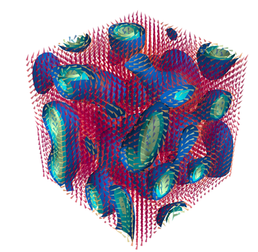
The figure shows results of a GPU accelerated Monte-Carlo simulation (credit Marijan Beg ).
For queries about this topic, contact Hans Fangohr.
View the calendar of events relating to this topic.
Projects
A Fast Multipole Method for the Bessel potential
Marc Molinari, Simon Cox (Investigators), Neil O'Brien
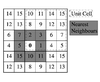
The fast multipole method (FMM) proposed by Greengard and Rokhlin provides a method by which the O(N-squared) many-body problem can be reduced to O(N) complexity. In this project, a multipole method is developed to calculate the energy of a system of vortices in a high temperature superconductor, where the many-body interactions give rise to rich and complex physics. The method developed here is suitable for systems where the interactions are governed by a Bessel potential rather than the usual logarithmic potentials occurring in gravitational and electrostatic problems. We derive and apply vectorised forms of the Gegenbauer addition formulae in order to achieve the O(N) scaling associated with fast multipole methods.
Centre for Doctoral Training in Next Generation Computational Modelling
Hans Fangohr, Ian Hawke, Peter Horak (Investigators), Susanne Ufermann Fangohr, Thorsten Wittemeier, Kieran Selvon, Alvaro Perez-Diaz, David Lusher, Ashley Setter, Emanuele Zappia, Hossam Ragheb, Ryan Pepper, Stephen Gow, Jan Kamenik, Paul Chambers, Robert Entwistle, Rory Brown, Joshua Greenhalgh, James Harrison, Jonathon Waters, Ioannis Begleris, Craig Rafter
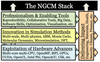
The £10million Centre for Doctoral Training was launched in November 2013 and is jointly funded by EPSRC, the University of Southampton, and its partners.
The NGCM brings together world-class simulation modelling research activities from across the University of Southampton and hosts a 4-year doctoral training programme that is the first of its kind in the UK.
Deep Optimisation
Jamie Caldwell
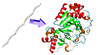
The project will develop the implementation and application of a new optimisation technique. 'Deep optimisation' combines deep learning techniques in neural networks with distributed optimisation methods to create a dynamically re-scalable optimisation process. This project will develop this technique to better-understand its capabilities and limitations and develop GPU implementations. The protein structure prediction problem will be used as the main test application.
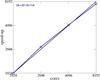
Development of a novel Navier-Stokes solver (HiPSTAR)
Richard Sandberg (Investigator)
Development of a highly efficient Navier-Stokes solver for HPC.
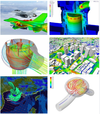
Massively-Parallel Computational Fluid Dynamics
Simon Cox, Stephen Turnock, Alexander Phillips (Investigators), James Hawkes
Computational Fluid Dynamics (CFD) is a numerical method for modelling fluid flows and heat transfer - and is used in many industries. It can be used to model dynamics around aircraft, ships and land vehicles; and also has uses in engine design, architecture, weather forecasting, medicine, computer-generated imagery (CGI) and much more. To harness the full power of CFD, it is necessary to utilise the full power of modern supercomputers. This project aims to improve the scalabilty of existing CFD codes so that more complex problems can be tackled efficiently.

Meshless Methods for Photonic Crystal Modelling
Kamal Djidjeli, Marc Molinari, Simon Cox (Investigators), Neil O'Brien, Elizabeth Hart
We apply meshless methods to the problems of simulating photonic crystals. The meshless methods utilise compactly-supported radial basis functions (CSRBFs) and offer a promising alternative to the conventional plane-wave expansion method for calculating the band structure of photonic crystals.
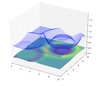
Multiscale modelling of neutron star oceans
Ian Hawke (Investigator), Alice Harpole
Type I X-ray bursts are explosions which occur on the surface of some
neutron stars. It is believed that the burning begins in a localised spot in the ocean of the
star before spreading across the entire surface. By gaining a better understanding of X-ray
bursts, it is hoped that tighter limits can be determined for other neutron star properties
such as the radius and magnetic field strength.

MXL Project
Mark Taylor, Junfen Shi (Investigators)
‘MXL’ is short for “Enhanced patient safety by computational Modelling from clinically available X-rays to minimise the risk of overload and instability for optimised function and Longevity”. This is an international EU-funded project which the Bioengineering Sciences Research Group at Southampton is involved in. For more information, visit http://www.m-x-l.eu
Pushing the Envelope of Planetary Formation and Evolution Simulations
Peter Bartram
A full understanding of the formation and the early evolution of the Solar System and extrasolar planetary systems ranks among natural science's grand challenges, and at present, even the dominant processes responsible for generating the observed planetary architecture remain elusive.
pyQCD
Matthew Spraggs
A basic Python package to perform coarse lattice QCD simulations on desktop and workstation computers.
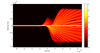
Soft x-ray science on a tabletop
Peter Horak, Jeremy Frey, Bill Brocklesby (Investigators), Patrick Anderson, Arthur Degen-Knifton
Complex numerical simulations are being performed to aid experimentalists at Southampton realize the next generation of high brightness tabletop sources of coherent soft x-rays.?
Sustainable domain-specific software generation tools for extremely parallel particle-based simulations
Chris-Kriton Skylaris (Investigator)
A range of particle based methods (PBM) are currently used to simulate materials in chemistry, engineering, physics and biophysics. The 4 types of PBM considered directly in the proposed are molecular dynamics (MD), the ONETEP quantum mechanics-based program, discrete element modelling (DEM), and smoothed particle hydrodynamics (SPH).
The overall research objective is to develop a sustainable tool that will deliver, in the future, cutting edge research applicable to applications ranging from dam engineering to atomistic drug design.
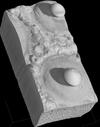
µ-VIS Computed Tomography Centre
Ian Sinclair, Richard Boardman, Dmitry Grinev, Philipp Thurner, Simon Cox, Jeremy Frey, Mark Spearing, Kenji Takeda (Investigators)
A dedicated centre for computed tomography (CT) at Southampton, providing complete support for 3D imaging science, serving Engineering, Biomedical, Environmental and Archaeological Sciences. The centre encompasses five complementary scanning systems supporting resolutions down to 200nm and imaging volumes in excess of one metre: from a matchstick to a tree trunk, from an ant's wing to a gas turbine blade.
People
 Simon Cox
Professor, Engineering Sciences (FEE)
 Hans Fangohr
Professor, Engineering Sciences (FEE)
 Jeremy Frey
Professor, Chemistry (FNES)
 Richard Sandberg
Professor, Engineering Sciences (FEE)
 Ian Sinclair
Professor, Engineering Sciences (FEE)
 Mark Spearing
Professor, Engineering Sciences (FEE)
 Mark Taylor
Professor, Engineering Sciences (FEE)
 Stephen Turnock
Professor, Engineering Sciences (FEE)
 Bill Brocklesby
Reader, Optoelectronics Research Centre
 Peter Horak
Reader, Optoelectronics Research Centre
 Tobias Keller
Reader, Ocean & Earth Science (FNES)
 Paul Skipp
Reader, Biological Sciences (FNES)
 Kamal Djidjeli
Lecturer, Engineering Sciences (FEE)
 Gwenael Gabard
Lecturer, Institute of Sound & Vibration Research (FEE)
 Ian Hawke
Lecturer, Mathematics (FSHS)
 Ivan Markovsky
Lecturer, Electronics and Computer Science (FPAS)
 Chris-Kriton Skylaris
Lecturer, Chemistry (FNES)
 Philipp Thurner
Lecturer, Engineering Sciences (FEE)
 Richard Boardman
Senior Research Fellow, Engineering Sciences (FEE)
 Philip Williamson
Senior Research Fellow, Biological Sciences (FNES)
Petros BogiatzisResearch Fellow, Ocean & Earth Science (FNES)
Dmitry GrinevResearch Fellow, Engineering Sciences (FEE)
Elizabeth HartResearch Fellow, Engineering Sciences (FEE)
 Robin Wilson
Research Fellow, Geography (FSHS)
Patrick AndersonPostgraduate Research Student, Optoelectronics Research Centre
 Jordi Arranz
Postgraduate Research Student, Electronics and Computer Science (FPAS)
Peter BartramPostgraduate Research Student, University of Southampton
 Ioannis Begleris
Postgraduate Research Student, Engineering Sciences (FEE)
 Rory Brown
Postgraduate Research Student, Civil Engineering & the Environment (FEE)
 Jamie Caldwell
Postgraduate Research Student, Engineering Sciences (FEE)
 Paul Chambers
Postgraduate Research Student, Engineering Sciences (FEE)
 Dmitri Chernyshenko
Postgraduate Research Student, Engineering Sciences (FEE)
Paul CrossPostgraduate Research Student, Engineering Sciences (FEE)
 Evander DaCosta
Postgraduate Research Student, Electronics and Computer Science (FPAS)
 Robert Entwistle
Postgraduate Research Student, Engineering Sciences (FEE)
 Stephen Gow
Postgraduate Research Student, Engineering Sciences (FEE)
 Joshua Greenhalgh
Postgraduate Research Student, Engineering Sciences (FEE)
 James Harrison
Postgraduate Research Student, Engineering Sciences (FEE)
 James Hawkes
Postgraduate Research Student, Engineering Sciences (FEE)
 Tom Hebbron
Postgraduate Research Student, Electronics and Computer Science (FPAS)
Harry LPostgraduate Research Student, Biological Sciences (FNES)
 Justin Lovegrove
Postgraduate Research Student, Mathematics (FSHS)
 David Lusher
Postgraduate Research Student, Engineering Sciences (FEE)
Nicholas McCawPostgraduate Research Student, Engineering Sciences (FEE)
 Juraj Mihalik
Postgraduate Research Student, Engineering Sciences (FEE)
 Neil O'Brien
Postgraduate Research Student, Engineering Sciences (FEE)
 Alvaro Perez-Diaz
Postgraduate Research Student, Engineering Sciences (FEE)
Richard PichlerPostgraduate Research Student, Civil Engineering & the Environment (FEE)
 Daniel Powell
Postgraduate Research Student, Engineering Sciences (FEE)
 Craig Rafter
Postgraduate Research Student, Engineering Sciences (FEE)
 Hossam Ragheb
Postgraduate Research Student, Engineering Sciences (FEE)
 Álvaro Ruiz-Serrano
Postgraduate Research Student, Chemistry (FNES)
 Kieran Selvon
Postgraduate Research Student, Engineering Sciences (FEE)
 Ashley Setter
Postgraduate Research Student, Engineering Sciences (FEE)
 Matthew Spraggs
Postgraduate Research Student, Electronics and Computer Science (FPAS)
 Jonathon Waters
Postgraduate Research Student, Engineering Sciences (FEE)
 Thorsten Wittemeier
Postgraduate Research Student, Engineering Sciences (FEE)
 Emanuele Zappia
Postgraduate Research Student, Engineering Sciences (FEE)
Matthew HigginsUndergraduate Research Student, Biological Sciences (FNES)
Jess JonesTechnical Staff, iSolutions
 Elena Vataga
Technical Staff, iSolutions
 Petrina Butler
Administrative Staff, Research and Innovation Services
 Susanne Ufermann Fangohr
Administrative Staff, Civil Engineering & the Environment (FEE)
 Jan Kamenik
Alumnus, University of Southampton
 Arthur Lugtigheid
Alumnus, Psychology (FSHS)
 Marc Molinari
Alumnus, Engineering Sciences (FEE)
John MuddleAlumnus, Mathematics (FSHS)
Andrew PennerAlumnus, Mathematics (FSHS)
 Kenji Takeda
Alumnus, Engineering Sciences (FEE)
 Marijan Beg
External Member, Imperial College London
 Mark Vousden
External Member, University of Southampton
Arthur Degen-KniftonNone, None
Alexander PhillipsNone, None
Junfen ShiNone, None