Complex fluids
For queries about this topic, contact Anurag Agarwal.
View the calendar of events relating to this topic.
Projects
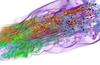
Advanced modelling for two-phase reacting flow
Edward Richardson (Investigator)
Engine designers want computer programs to help them invent ways to use less fuel and produce less pollution. This research aims to provide an accurate and practical model for the injection and combustion of liquid fuel blends.

Centre for Doctoral Training in Next Generation Computational Modelling
Hans Fangohr, Ian Hawke, Peter Horak (Investigators), Susanne Ufermann Fangohr, Thorsten Wittemeier, Kieran Selvon, Alvaro Perez-Diaz, David Lusher, Ashley Setter, Emanuele Zappia, Hossam Ragheb, Ryan Pepper, Stephen Gow, Jan Kamenik, Paul Chambers, Robert Entwistle, Rory Brown, Joshua Greenhalgh, James Harrison, Jonathon Waters, Ioannis Begleris, Craig Rafter
The £10million Centre for Doctoral Training was launched in November 2013 and is jointly funded by EPSRC, the University of Southampton, and its partners.
The NGCM brings together world-class simulation modelling research activities from across the University of Southampton and hosts a 4-year doctoral training programme that is the first of its kind in the UK.
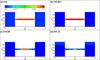
Diffusion at solute/solvent interfaces
Anatoliy Vorobev (Investigator), Ruilin Xie
We aim to develop the theoretical model that would provide an accurate description for the mixing process of two miscible liquids, and, in particular, would reproduce our experimental optical observations. The model based on the phase-field (Cahn-Hilliard) approach is adopted for the mixture of two miscible liquids. The model takes into account the surface tension effects, the non-Fickian diffusion across the liquid/liquid interface, and hydrodynamic flows that might be generated near the interface by the concentration gradients.
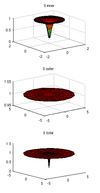
Efficient algorithms for liquid crystal alignment
Giampaolo D'Alessandro, Timothy Sluckin (Investigators)
We have developed an efficient algorithm to determine the liquid crystal alignment in the absence of defects. The aim of this project is to extend this algorithm to include defects.
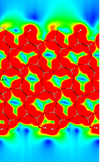
Investigation into the Interfacial Physics of Field Effect Biosensors
Nicolas Green, Chris-Kriton Skylaris (Investigators), Benjamin Lowe
This interdisciplinary research aims to improve understanding of Field Effect Transistor Biosensors (Bio-FETs) and to work towards a multiscale model which can be used to better understand and predict device response.
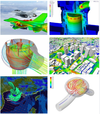
Massively-Parallel Computational Fluid Dynamics
Simon Cox, Stephen Turnock, Alexander Phillips (Investigators), James Hawkes
Computational Fluid Dynamics (CFD) is a numerical method for modelling fluid flows and heat transfer - and is used in many industries. It can be used to model dynamics around aircraft, ships and land vehicles; and also has uses in engine design, architecture, weather forecasting, medicine, computer-generated imagery (CGI) and much more. To harness the full power of CFD, it is necessary to utilise the full power of modern supercomputers. This project aims to improve the scalabilty of existing CFD codes so that more complex problems can be tackled efficiently.
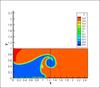
Miscible multiphase systems with phase transition
Andrea Boghi
We aim to develop the computational model for the miscible displacement of liquid occupying a porous bulk, as, for instance, in the processes of vegetable solvent extraction, soil remediation or enhanced oil recovery. All these process includes the dissolution of solute and the displacement of solution from porous media. The focus of our current research work is, therefore, twofold: (i) to develop and verify a theoretical model for an evolving miscible displacement, by taking into account dynamic surface tension and mass diffusion through the interphase boundary, and (ii) to provide a model for the solute/solvent displacement from the porous volume.

Multiscale Relativistic Simulations
Ian Hawke (Investigator), Alex Wright
There has been recent success in experiments, such as LIGO, in detecting the mergers of celestial objects via the gravitational waves they emit. By implementing numerical methods, we aim to speed up the numerical simulations of these events but up to two orders of magnitudes, and study binary inspirals in greater detail and over much larger timespans.

Multiscale Relativistic Simulations
There has been recent success in experiments, such as LIGO, in detecting the mergers of celestial objects via the gravitational waves they emit. I will use numerical methods to simulate the inspiral of a black hole/neutron star binary system.
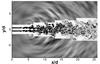
Numerical investigation of the true sources of jet noise
Anurag Agarwal (Investigator), Samuel Sinayoko
Aircraft noise severely impacts the quality of life of people living close to airports. Noise generation by aircrafts is especially large during take-off. Jet noise is the dominant noise source during take-off. It is produced by the high speed flow generated by the engine. However, the actual source of sound remains unknown. A deeper understanding of the sources of jet noise is need to be able to reduce the noise. The aim of this project is to implement a innovative method that would allow to identify the sources of jet noise.
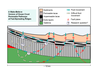
Porous Media and Hydrothermal Circulation in Weakened Ocean Crust
Formation of oceanic crust is an interplay between magma and the cooling hydrothermal system above that its own heat drives. To understand this system we must understand where and how water circulates through the crust.
Ocean crust is riddled with faults and other permeable pathways along which water preferentially flows. We seek to use basic numerical models of circulation in porous media to understand how much of an influence on crust formation these anomalous features have, compared to the bulk, unfractured crust.
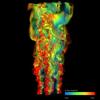
Stratified combustion physics and modelling
Edward Richardson (Investigator)
Full-resolution simulation data for turbulent combustion are used to investigate the fundamental impact, and practical modelling, of fuel-air stratification.
Unsteady Aerodynamics of Wings in Extreme Conditions
Charles Badoe (Investigator), Neil Sandham, Zheng-Tong Xie
Sizing of civil aircraft is dictated by extreme loads experienced at the limits of flight envelope, for example during gust, turbulence or low speed manoeuvre. The project aims to understand the unsteady aerodynamic behaviour of wings in extreme conditions involving heaving motions near stall.

Vertical turbulence structures in the benthic boundary layer as related to suspended sediments
Hachem Kassem (Investigator), Charlie Thompson
There is a genuine need for better, more robust modelling of suspended sediment transport in the coastal zone, both to understand its morphological evolution and it's impact on biogeochemical cycling, ecosystems services and to guide engineering applications such as dredging and defence schemes against erosion and flooding.
The suspension of sediment in turbulent flows is a complex case of fluid-particle interaction, governed by shear stresses (momentum exchanges) at the bed and within the benthic boundary layer (BBL). The intermittent transfer of momentum is a manifestation of coherent turbulent vortex structures within the flow. The passage of such structures (or clusters of) is often related to perturbations of bottom sediment, which may be entrained and maintained in suspension if sufficient turbulent energy is provided. The first part of my PhD investigated the temporal and scale relationships between wave–generated boundary layer turbulence and event–driven sediment transport in oscillatory flow in the nearshore. This involved complex statistical, spectral, quadrant and wavelet analysis of high frequency nearshore measurements of turbulence and suspended sediments (medium sand), collected as part of the EU-funded Barrier Dynamics Experiment II (BARDEX II). The following step aims to develop a 3D numerical model in OpenFOAM which would reproduce the fine scale turbulence structures observed over a fixed rippled bed in oscillatory flow. The 3D velocity field, turbulent components, correlations (stresses) and quadrant structures will then be linked to observed sediment resuspension events. The model will be validated against a set of laboratory experiments undertaken at the Fast Flow Facility at HR Wallingford.
People
 Simon Cox
Professor, Engineering Sciences (FEE)
 Hans Fangohr
Professor, Engineering Sciences (FEE)
 Neil Sandham
Professor, Engineering Sciences (FEE)
 Timothy Sluckin
Professor, Mathematics (FSHS)
 Stephen Turnock
Professor, Engineering Sciences (FEE)
 Zheng-Tong Xie
Professor, Engineering Sciences (FEE)
 Giampaolo D'Alessandro
Reader, Mathematics (FSHS)
 Nicolas Green
Reader, Electronics and Computer Science (FPAS)
 Peter Horak
Reader, Optoelectronics Research Centre
Tobias KellerReader, Ocean & Earth Science (FNES)
 Tiina Roose
Reader, Engineering Sciences (FEE)
 Edward Richardson
Senior Lecturer, Engineering Sciences (FEE)
 Gwenael Gabard
Lecturer, Institute of Sound & Vibration Research (FEE)
 Ian Hawke
Lecturer, Mathematics (FSHS)
 Chris-Kriton Skylaris
Lecturer, Chemistry (FNES)
 Anatoliy Vorobev
Lecturer, Engineering Sciences (FEE)
Charlie ThompsonSenior Research Fellow, Ocean & Earth Science (FNES)
Felipe Alves PortelaResearch Fellow, Engineering Sciences (FEE)
Charles BadoeResearch Fellow, Civil Engineering & the Environment (FEE)
 Andrea Boghi
Research Fellow, Engineering Sciences (FEE)
Nicola De TullioResearch Fellow, Engineering Sciences (FEE)
 Aleksander Dubas
Research Fellow, Engineering Sciences (FEE)
 Hachem Kassem
Research Fellow, Ocean & Earth Science (FNES)
 Ioannis Begleris
Postgraduate Research Student, Engineering Sciences (FEE)
 Rory Brown
Postgraduate Research Student, Civil Engineering & the Environment (FEE)
 Paul Chambers
Postgraduate Research Student, Engineering Sciences (FEE)
Paul CrossPostgraduate Research Student, Engineering Sciences (FEE)
 Robert Entwistle
Postgraduate Research Student, Engineering Sciences (FEE)
 Stephen Gow
Postgraduate Research Student, Engineering Sciences (FEE)
 Joshua Greenhalgh
Postgraduate Research Student, Engineering Sciences (FEE)
 James Harrison
Postgraduate Research Student, Engineering Sciences (FEE)
 James Hawkes
Postgraduate Research Student, Engineering Sciences (FEE)
 Justin Lovegrove
Postgraduate Research Student, Mathematics (FSHS)
 Benjamin Lowe
Postgraduate Research Student, Electronics and Computer Science (FPAS)
 David Lusher
Postgraduate Research Student, Engineering Sciences (FEE)
 Juraj Mihalik
Postgraduate Research Student, Engineering Sciences (FEE)
 Alvaro Perez-Diaz
Postgraduate Research Student, Engineering Sciences (FEE)
 Lyuboslav Petrov
Postgraduate Research Student, Electronics and Computer Science (FPAS)
Richard PichlerPostgraduate Research Student, Civil Engineering & the Environment (FEE)
 Craig Rafter
Postgraduate Research Student, Engineering Sciences (FEE)
 Hossam Ragheb
Postgraduate Research Student, Engineering Sciences (FEE)
 Kieran Selvon
Postgraduate Research Student, Engineering Sciences (FEE)
 Ashley Setter
Postgraduate Research Student, Engineering Sciences (FEE)
 Stefano Spagnolo
Postgraduate Research Student, Engineering Sciences (FEE)
 Valerio Vitale
Postgraduate Research Student, Electronics and Computer Science (FPAS)
 Jonathon Waters
Postgraduate Research Student, Engineering Sciences (FEE)
 Thorsten Wittemeier
Postgraduate Research Student, Engineering Sciences (FEE)
 Alex Wright
Postgraduate Research Student, Civil Engineering & the Environment (FEE)
Ruilin XiePostgraduate Research Student, Engineering Sciences (FEE)
 Emanuele Zappia
Postgraduate Research Student, Engineering Sciences (FEE)
 Petrina Butler
Administrative Staff, Research and Innovation Services
 Susanne Ufermann Fangohr
Administrative Staff, Civil Engineering & the Environment (FEE)
Anurag AgarwalAlumnus, Institute of Sound & Vibration Research (FEE)
 Jan Kamenik
Alumnus, University of Southampton
John MuddleAlumnus, Mathematics (FSHS)
 Samuel Sinayoko
Alumnus, BMLL
Alexander PhillipsNone, None
Daisuke SasakiNone, None