GPU-libs
For queries about this topic, contact Mark Zwolinski.
View the calendar of events relating to this topic.
Projects
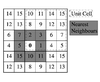
A Fast Multipole Method for the Bessel potential
Marc Molinari, Simon Cox (Investigators), Neil O'Brien
The fast multipole method (FMM) proposed by Greengard and Rokhlin provides a method by which the O(N-squared) many-body problem can be reduced to O(N) complexity. In this project, a multipole method is developed to calculate the energy of a system of vortices in a high temperature superconductor, where the many-body interactions give rise to rich and complex physics. The method developed here is suitable for systems where the interactions are governed by a Bessel potential rather than the usual logarithmic potentials occurring in gravitational and electrostatic problems. We derive and apply vectorised forms of the Gegenbauer addition formulae in order to achieve the O(N) scaling associated with fast multipole methods.
Deep Optimisation
Jamie Caldwell
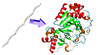
The project will develop the implementation and application of a new optimisation technique. 'Deep optimisation' combines deep learning techniques in neural networks with distributed optimisation methods to create a dynamically re-scalable optimisation process. This project will develop this technique to better-understand its capabilities and limitations and develop GPU implementations. The protein structure prediction problem will be used as the main test application.

Meshless Methods for Photonic Crystal Modelling
Kamal Djidjeli, Marc Molinari, Simon Cox (Investigators), Neil O'Brien, Elizabeth Hart
We apply meshless methods to the problems of simulating photonic crystals. The meshless methods utilise compactly-supported radial basis functions (CSRBFs) and offer a promising alternative to the conventional plane-wave expansion method for calculating the band structure of photonic crystals.
Pushing the Envelope of Planetary Formation and Evolution Simulations
Peter Bartram
A full understanding of the formation and the early evolution of the Solar System and extrasolar planetary systems ranks among natural science's grand challenges, and at present, even the dominant processes responsible for generating the observed planetary architecture remain elusive.
Soft x-ray science on a tabletop
Peter Horak, Jeremy Frey, Bill Brocklesby (Investigators), Patrick Anderson, Arthur Degen-Knifton
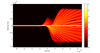
Complex numerical simulations are being performed to aid experimentalists at Southampton realize the next generation of high brightness tabletop sources of coherent soft x-rays.?
People
 Simon Cox
Professor, Engineering Sciences (FEE)
 Hans Fangohr
Professor, Engineering Sciences (FEE)
 Jeremy Frey
Professor, Chemistry (FNES)
 Bill Brocklesby
Reader, Optoelectronics Research Centre
 Peter Horak
Reader, Optoelectronics Research Centre
 Edward Richardson
Senior Lecturer, Engineering Sciences (FEE)
 Kamal Djidjeli
Lecturer, Engineering Sciences (FEE)
 Gwenael Gabard
Lecturer, Institute of Sound & Vibration Research (FEE)
 Ivan Markovsky
Lecturer, Electronics and Computer Science (FPAS)
 Philip Williamson
Senior Research Fellow, Biological Sciences (FNES)
 Petros Bogiatzis
Research Fellow, Ocean & Earth Science (FNES)
Elizabeth HartResearch Fellow, Engineering Sciences (FEE)
 Robin Wilson
Research Fellow, Geography (FSHS)
Patrick AndersonPostgraduate Research Student, Optoelectronics Research Centre
 Jordi Arranz
Postgraduate Research Student, Electronics and Computer Science (FPAS)
Peter BartramPostgraduate Research Student, University of Southampton
 Patrick Bechlars
Postgraduate Research Student, Engineering Sciences (FEE)
 Jamie Caldwell
Postgraduate Research Student, Engineering Sciences (FEE)
 Neil O'Brien
Postgraduate Research Student, Engineering Sciences (FEE)
 Álvaro Ruiz-Serrano
Postgraduate Research Student, Chemistry (FNES)
Jess JonesTechnical Staff, iSolutions
 Petrina Butler
Administrative Staff, Research and Innovation Services
 Marc Molinari
Alumnus, Engineering Sciences (FEE)
Andrew PennerAlumnus, Mathematics (FSHS)
Arthur Degen-KniftonNone, None