SVN

In software development, (Apache) Subversion (command name svn) is a revision control system initiated in 2000 by CollabNet Inc. Developers use Subversion to maintain current and historical versions of files such as source code, web pages, and documentation. Its goal is to be a mostly-compatible successor to the widely used Concurrent Versions System (CVS). (More from Wikipedia)
For queries about this topic, contact Hans Fangohr.
View the calendar of events relating to this topic.
Projects
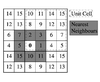
A Fast Multipole Method for the Bessel potential
Marc Molinari, Simon Cox (Investigators), Neil O'Brien
The fast multipole method (FMM) proposed by Greengard and Rokhlin provides a method by which the O(N-squared) many-body problem can be reduced to O(N) complexity. In this project, a multipole method is developed to calculate the energy of a system of vortices in a high temperature superconductor, where the many-body interactions give rise to rich and complex physics. The method developed here is suitable for systems where the interactions are governed by a Bessel potential rather than the usual logarithmic potentials occurring in gravitational and electrostatic problems. We derive and apply vectorised forms of the Gegenbauer addition formulae in order to achieve the O(N) scaling associated with fast multipole methods.
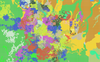
A spatially-explicit agent-based model of jaguar population dynamics
Jason Noble, Patrick Doncaster (Investigators), Angela Watkins
A single species spatially-explicit agent-based model has been developed that illustrates the role of simulation modelling, integrated with an adapted least-cost modelling approach and real-world geographical data, in exploring jaguar population dynamics.
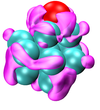
Ab initio simulations of chemical reactions on platinum nanoparticles
Chris-Kriton Skylaris (Investigator), Álvaro Ruiz-Serrano, Peter Cherry
•Use first principles calculations to study the relationship between shape and size of nanoparticle and the oxygen adsorption energy.
• Investigate the effect of high oxygen coverage on the catalytic activity of the nanoparticles.
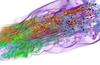
Advanced modelling for two-phase reacting flow
Edward Richardson (Investigator)
Engine designers want computer programs to help them invent ways to use less fuel and produce less pollution. This research aims to provide an accurate and practical model for the injection and combustion of liquid fuel blends.
Automated selection of suitable atmospheric calibration sites for satellite imagery
Robin Wilson, Edward Milton (Investigators)
Ground calibration targets (GCTs) play a vital role in atmospheric correction of satellite sensor data in the optical region, but selecting suitable targets is a subjective and time- consuming task. This project is developing methods to automatically select suitable GCTs, using a combination of remotely sensed multispectral and topographic data.
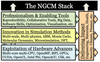
Centre for Doctoral Training in Next Generation Computational Modelling
Hans Fangohr, Ian Hawke, Peter Horak (Investigators), Susanne Ufermann Fangohr, Thorsten Wittemeier, Kieran Selvon, Alvaro Perez-Diaz, David Lusher, Ashley Setter, Emanuele Zappia, Hossam Ragheb, Ryan Pepper, Stephen Gow, Jan Kamenik, Paul Chambers, Robert Entwistle, Rory Brown, Joshua Greenhalgh, James Harrison, Jonathon Waters, Ioannis Begleris, Craig Rafter
The £10million Centre for Doctoral Training was launched in November 2013 and is jointly funded by EPSRC, the University of Southampton, and its partners.
The NGCM brings together world-class simulation modelling research activities from across the University of Southampton and hosts a 4-year doctoral training programme that is the first of its kind in the UK.
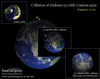
Cloud Computing for Planetary Defense
Hugh Lewis, Kenji Takeda (Investigators), Steven Johnston
We demonstrate how a cloud-based computing architecture can be used for planetary defense and space situational awareness (SSA). We show how utility compute can facilitate both a financially economical and highly scalable solution for space debris and near-earth object impact analysis. As we improve our ability to track smaller space objects, and satellite collisions occur, the volume of objects being tracked vastly increases, increasing computational demands. Propagating trajectories and calculating conjunctions becomes increasingly time critical, thus requiring an architecture which can scale with demand. The extension of this to tackle the problem of a future near-earth object impact is discussed, and how cloud computing can play a key role in this civilisation-threatening scenario.
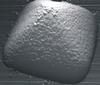
Designer 3D Magnetic Mesostructures
Hans Fangohr (Investigator), Matteo Franchin, Andreas Knittel
A new electrodeposition self-assembly method allows for the growth of well defined mesostructures. This project's aim is to use this method in order to fabricate supraconducting and ferromagnetic mesostructures. Numerical methods based on well-established models are used in order to characterise the grown structures.
Development of a novel Navier-Stokes solver (HiPSTAR)
Richard Sandberg (Investigator)
Development of a highly efficient Navier-Stokes solver for HPC.
Development of wide-ranging functionality in ONETEP
Chris-Kriton Skylaris (Investigator), Jacek Dziedzic
ONETEP is at the cutting edge of developments in first principles calculations. However, while the fundamental difficulties of performing accurate first-principles calculations with linear-scaling cost have been solved, only a small core of functionality is currently available in ONETEP which prevents its wide application. In this collaborative project between three Universities, the original developers of ONETEP will lead an ambitious workplan whereby the functionality of the code will be rapidly and significantly enriched.

Direct Numerical Simulations of transsonic turbine tip gap flow
Richard Sandberg (Investigator)
Direct Numerical Simulations are conducted of the transsonic flow through the tip gap at real engine conditions.

Dynamag: computational magnonics
Hans Fangohr, Atul Bhaskar (Investigators), Matteo Franchin, Andreas Knittel
Analytical treatment of long range magneto-dipole interactions is a bottle-neck of magnonics and more generally of the theory of spin waves in non-uniform media. This project develops a theoretical framework for analysis of magnonic phenomena in magnetic nano-structures, including isolated nano-elements, arrays of those, and extended magnonic crystals. The DYNAMAG project is funded by the EU FP7 and the DST of India.

Eddy-resol?ving Simulation?s for Turbomachi?nery Applicatio?ns
Richard Sandberg (Investigator), Li-Wei Chen
Traditionally, the design of turbomachinery components has been exclusively accomplished with steady CFD, with Reynolds Averaged Navier-Stokes (RANS) models being the predominant choice. With computing power continuously increasing, high-fidelity numerical simulations of turbomachinery components are now becoming a valuable research tool for validating the design process and continued development of design tool.
In the current project, Direct Numerical Simulations (DNS) and other eddy-resolving approaches will be performed of turbomachinery components to establish benchmark data for design tools, and to investigate physical mechanisms that cannot be captured by traditional CFD approaches.
Fracturing of small social networks
Seth Bullock, Sally Brailsford (Investigators), Elisabeth zu-Erbach-Schoenberg
A connected social network is a very important factor for the success of groups and organisations. We investigate which factors make a group more resistant to the effects of disagreements which commonly happen in small social networks.
Gravitational waves from neutron stars
Ian Hawke (Investigator)
Gravitational waves, once detected, will give information about the extremes of space and time. Compact objects such as neutron stars are perfect locations for generating such waves.
Is fine-scale turbulence universal?
Richard Sandberg (Investigator), Patrick Bechlars
Complementary numerical simulations and experiments of various canonical flows will try to answer the question whether fine-scale turbulence is universal.
Jet noise
Richard Sandberg (Investigator), Neil Sandham
Direct numerical simulations are used to investigate jet noise.
Measuring biomolecules - improvements to the spectroscopic ruler
Pavlos Lagoudakis, Tom Brown (Investigators), Jan Junis Rindermann, James Richardson
The spectroscopic ruler is a technique to measure the geometry of biomolecules on the nm scale by labeling them with pairs of fluorescent markers and measuring distance dependent non-radiative energy transfer between them. The remaining uncertainty in the application of the technique originates from the unknown orientation between the optical dipole moments of the fluorescent markers, especially when the molecule undergoes thermal fluctuations in physiological conditions. Recently we introduced a simulation based method for the interpretation of the fluorescence decay dynamics of the markers that allows us to retrieve both the average orientation and the extent of directional fluctuations of the involved dipole moments.

Meshless Methods for Photonic Crystal Modelling
Kamal Djidjeli, Marc Molinari, Simon Cox (Investigators), Neil O'Brien, Elizabeth Hart
We apply meshless methods to the problems of simulating photonic crystals. The meshless methods utilise compactly-supported radial basis functions (CSRBFs) and offer a promising alternative to the conventional plane-wave expansion method for calculating the band structure of photonic crystals.
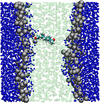
Multiscale modelling of biological membranes
Jonathan Essex (Investigator), Mario Orsi
Biological membranes are complex and fascinating systems, characterised by proteins floating in a sea of lipids. Biomembranes, besides being the fundamental structures employed by nature to encapsulate cells, play crucial roles in many phenomena indispensable for life, such as growth, energy storage, and in general information transduction via neural activity. In this project, we develop and apply multiscale computational models to simulate biological membranes and obtain molecular-level insights into fundamental structures and phenomena.

Nmag - computational micromagnetics
Hans Fangohr, Thomas Fischbacher (Investigators), Matteo Franchin, Andreas Knittel, Maximilian Albert, Dmitri Chernyshenko, Massoud Najafi, Richard Boardman
Nmag is a micromagnetic simulation package based on the general purpose multi-physics library nsim. It is developed by the group of Hans Fangohr and Thomas Fischbacher in the School of Engineering Sciences at the University of Southampton and released under the GNU GPL.
Operational Simulation of the Solent Search-and-Rescue environment
James Scanlan, Kenji Takeda, Hans Fangohr (Investigators), Ben Schumann
This project aims to identify useful metrics for a proposed Search-and-Rescue UAV and test it virtually in a realistic environment.
Pushing the Envelope of Planetary Formation and Evolution Simulations
Peter Bartram
A full understanding of the formation and the early evolution of the Solar System and extrasolar planetary systems ranks among natural science's grand challenges, and at present, even the dominant processes responsible for generating the observed planetary architecture remain elusive.
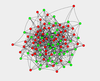
Separation of timescales in models of complex networks
Seth Bullock (Investigator), Elisabeth zu-Erbach-Schoenberg, Connor McCabe
In many real-world systems several processes act on the system state. The way these processes interact can have implications for the resulting system state. We investigate how separation of the timescales of two processes influences the system's equilibrium state.

Simulation modelling of habitat permeability for mammalian wildlife
Patrick Doncaster, Jason Noble (Investigators), Angela Watkins
Using and integrating least-cost models and agent-based simulations to explore the way in which mammals interact with, and hence move, through fragmented landscapes.
Software Sustainability Institute
Simon Hettrick (Investigator)
A national facility for cultivating world-class research through software
Software helps researchers to enhance their research, and improve the speed and accuracy of their results. The Software Sustainability Institute can help you introduce software into your research or improve the software you already use.
The Institute is based at the universities of Edinburgh, Manchester, Oxford and Southampton, and draws on a team of experts with a breadth of experience in software development, project and programme management, research facilitation, publicity and community engagement.
We help people build better software, and we work with researchers, developers, funders and infrastructure providers to identify key issues and best practice in scientific software.
Statistical model of the knee
Mark Taylor (Investigator), Francis Galloway, Prasanth Nair
Development of methods for large scale computational testing of a tibial tray incorporating inter-patient variability.
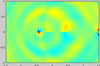
Stochastic computational methods for aero-acoustics
Gwenael Gabard (Investigator), Martina Dieste
Stochastic methods are used to synthesize a turbulent flow which is then used to model the sound radiated by an airfoil interacting with this turbulence. This approach is faster than performing a complete simulation of the flow field.
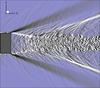
Supersonic axisymmetric wakes
Richard Sandberg (Investigator)
Direct numerical simulations are used to shed more light on structure formation and evolution in supersonic wakes.
Test and Rest
Hans Fangohr (Investigator), Evander DaCosta, James Graham, Oliver Laslett
Regression and system testing, automatic execution of testing - establishing best practice.
The ONETEP project
Chris-Kriton Skylaris (Investigator), Stephen Fox, Chris Pittock, Álvaro Ruiz-Serrano, Jacek Dziedzic
Program for large-scale quantum mechanical simulations of matter from first principles quantum mechanics. Based on theory and algorithms we have developed for linear-scaling density functional theory calculations on parallel computers.
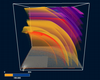
Whisky Code
Ian Hawke (Investigator)
A 3D finite volume code for simulating compact relativistic hydrodynamics.
People
 Sally Brailsford
Professor, Management (FBL)
 Tom Brown
Professor, Chemistry (FNES)
 Seth Bullock
Professor, Electronics and Computer Science (FPAS)
 Simon Cox
Professor, Engineering Sciences (FEE)
 Graeme Day
Professor, Chemistry (FNES)
 Jonathan Essex
Professor, Chemistry (FNES)
 Hans Fangohr
Professor, Engineering Sciences (FEE)
 Carsten Gundlach
Professor, Mathematics (FSHS)
 Pavlos Lagoudakis
Professor, Physics & Astronomy (FPAS)
Edward MiltonProfessor, Geography (FSHS)
 Richard Sandberg
Professor, Engineering Sciences (FEE)
 Neil Sandham
Professor, Engineering Sciences (FEE)
 James Scanlan
Professor, Engineering Sciences (FEE)
 Mark Taylor
Professor, Engineering Sciences (FEE)
 Patrick Doncaster
Reader, Biological Sciences (FNES)
Nicolas GreenReader, Electronics and Computer Science (FPAS)
 Peter Horak
Reader, Optoelectronics Research Centre
 Atul Bhaskar
Senior Lecturer, Engineering Sciences (FEE)
 Prasanth Nair
Senior Lecturer, Engineering Sciences (FEE)
 Edward Richardson
Senior Lecturer, Engineering Sciences (FEE)
 Kamal Djidjeli
Lecturer, Engineering Sciences (FEE)
 Gwenael Gabard
Lecturer, Institute of Sound & Vibration Research (FEE)
 Ian Hawke
Lecturer, Mathematics (FSHS)
 Denis Kramer
Lecturer, Engineering Sciences (FEE)
 Hugh Lewis
Lecturer, Engineering Sciences (FEE)
 Chris-Kriton Skylaris
Lecturer, Chemistry (FNES)
 Richard Boardman
Senior Research Fellow, Engineering Sciences (FEE)
Felipe Alves PortelaResearch Fellow, Engineering Sciences (FEE)
 Jacek Dziedzic
Research Fellow, Chemistry (FNES)
Elizabeth HartResearch Fellow, Engineering Sciences (FEE)
 Steven Johnston
Research Fellow, Engineering Sciences (FEE)
 Jason Noble
Research Fellow, Electronics and Computer Science (FPAS)
James RichardsonResearch Fellow, Chemistry (FNES)
 Robin Wilson
Research Fellow, Geography (FSHS)
 Maximilian Albert
Postgraduate Research Student, Engineering Sciences (FEE)
 Jordi Arranz
Postgraduate Research Student, Electronics and Computer Science (FPAS)
Peter BartramPostgraduate Research Student, University of Southampton
 Patrick Bechlars
Postgraduate Research Student, Engineering Sciences (FEE)
 Ioannis Begleris
Postgraduate Research Student, Engineering Sciences (FEE)
 Rory Brown
Postgraduate Research Student, Civil Engineering & the Environment (FEE)
 Paul Chambers
Postgraduate Research Student, Engineering Sciences (FEE)
 Peter Cherry
Postgraduate Research Student, Chemistry (FNES)
 Evander DaCosta
Postgraduate Research Student, Electronics and Computer Science (FPAS)
Martina DiestePostgraduate Research Student, Institute of Sound & Vibration Research (FEE)
 Samuel Diserens
Postgraduate Research Student, Engineering Sciences (FEE)
 Robert Entwistle
Postgraduate Research Student, Engineering Sciences (FEE)
Stephen FoxPostgraduate Research Student, Chemistry (FNES)
Francis GallowayPostgraduate Research Student, Engineering Sciences (FEE)
 Stephen Gow
Postgraduate Research Student, Engineering Sciences (FEE)
James GrahamPostgraduate Research Student, Electronics and Computer Science (FPAS)
 Joshua Greenhalgh
Postgraduate Research Student, Engineering Sciences (FEE)
 James Harrison
Postgraduate Research Student, Engineering Sciences (FEE)
 Tom Hebbron
Postgraduate Research Student, Electronics and Computer Science (FPAS)
 Oliver Laslett
Postgraduate Research Student, Civil Engineering & the Environment (FEE)
 David Lusher
Postgraduate Research Student, Engineering Sciences (FEE)
 Connor McCabe
Postgraduate Research Student, Electronics and Computer Science (FPAS)
 Neil O'Brien
Postgraduate Research Student, Engineering Sciences (FEE)
 Alvaro Perez-Diaz
Postgraduate Research Student, Engineering Sciences (FEE)
Richard PichlerPostgraduate Research Student, Civil Engineering & the Environment (FEE)
 Chris Pittock
Postgraduate Research Student, Chemistry (FNES)
 Craig Rafter
Postgraduate Research Student, Engineering Sciences (FEE)
 Hossam Ragheb
Postgraduate Research Student, Engineering Sciences (FEE)
 Jan Junis Rindermann
Postgraduate Research Student, Physics & Astronomy (FPAS)
 Álvaro Ruiz-Serrano
Postgraduate Research Student, Chemistry (FNES)
 Ben Schumann
Postgraduate Research Student, Engineering Sciences (FEE)
 Kieran Selvon
Postgraduate Research Student, Engineering Sciences (FEE)
 Ashley Setter
Postgraduate Research Student, Engineering Sciences (FEE)
 James Snowdon
Postgraduate Research Student, Civil Engineering & the Environment (FEE)
Johannes Van Der HorstPostgraduate Research Student, Electronics and Computer Science (FPAS)
 Jonathon Waters
Postgraduate Research Student, Engineering Sciences (FEE)
 Angela Watkins
Postgraduate Research Student, Biological Sciences (FNES)
 Thorsten Wittemeier
Postgraduate Research Student, Engineering Sciences (FEE)
 Emanuele Zappia
Postgraduate Research Student, Engineering Sciences (FEE)
 Davide Zilli
Postgraduate Research Student, Electronics and Computer Science (FPAS)
 Elisabeth zu-Erbach-Schoenberg
Postgraduate Research Student, Management (FBL)
Matthew HigginsUndergraduate Research Student, Biological Sciences (FNES)
Jess JonesTechnical Staff, iSolutions
 Elena Vataga
Technical Staff, iSolutions
 Petrina Butler
Administrative Staff, Research and Innovation Services
 Susanne Ufermann Fangohr
Administrative Staff, Civil Engineering & the Environment (FEE)
 Li-Wei Chen
Alumnus, Osney Thermo-Fluids Laboratory, Oxford University
 Thomas Fischbacher
Alumnus, Engineering Sciences (FEE)
 Matteo Franchin
Alumnus, Engineering Sciences (FEE)
 Jan Kamenik
Alumnus, University of Southampton
Kondwani KanjereAlumnus, Engineering Sciences (FEE)
 Andreas Knittel
Alumnus, Industry
 Arthur Lugtigheid
Alumnus, Psychology (FSHS)
 Marc Molinari
Alumnus, Engineering Sciences (FEE)
John MuddleAlumnus, Mathematics (FSHS)
 Massoud Najafi
Alumnus, Arbeitsbereich Technische Informatik Systeme, University of Hamburg, Germany
Nicolas PalopoliAlumnus, Biological Sciences (FNES)
 Kenji Takeda
Alumnus, Engineering Sciences (FEE)
 Ian Bush
External Member, NAG Ltd, Oxford
Mario OrsiExternal Member, Queen Mary University of London
 Daniel Pope
External Member, Mauve Internet Ltd.
 Mark Vousden
External Member, University of Southampton
Simon HettrickNone, None
Daisuke SasakiNone, None
Sheng YangNone, None