Data Science

Data Science is an interdisciplinary field about processes and systems to extract knowledge or insights from data in various forms, either structured or unstructured,[1][2] which is a continuation of some of the data analysis fields such as statistics, data mining, and predictive analytics, similar to Knowledge Discovery in Databases (KDD). (See more from Wikipedia )
For queries about this topic, contact Hans Fangohr.
View the calendar of events relating to this topic.
Projects

Census 2022: Transforming Small Area Socio-Economic Indicators through Big Data
Patrick James, Ben Anderson (Investigators)
One of only 20 to be funded under the ESRC’s new ‘Transformative Social Science’ programme, this project will explore the feasibility of estimating small area (neighbourhood) census-like statistics from transactional ‘big data’ including large scale fine grained temporal energy monitoring data held by the Energy & Climate Change Division (FEE).
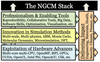
Centre for Doctoral Training in Next Generation Computational Modelling
Hans Fangohr, Ian Hawke, Peter Horak (Investigators), Susanne Ufermann Fangohr, Thorsten Wittemeier, Kieran Selvon, Alvaro Perez-Diaz, David Lusher, Ashley Setter, Emanuele Zappia, Hossam Ragheb, Ryan Pepper, Stephen Gow, Jan Kamenik, Paul Chambers, Robert Entwistle, Rory Brown, Joshua Greenhalgh, James Harrison, Jonathon Waters, Ioannis Begleris, Craig Rafter
The £10million Centre for Doctoral Training was launched in November 2013 and is jointly funded by EPSRC, the University of Southampton, and its partners.
The NGCM brings together world-class simulation modelling research activities from across the University of Southampton and hosts a 4-year doctoral training programme that is the first of its kind in the UK.
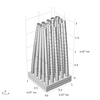
Optical Characterisation of Black Silicon for Photovoltaics Using the Finite Element Method
Jack Tyson (Investigator)
Here we present a novel method of simulating the reflectance spectra of black silicon solar cells using the finite element method. Designed in COMSOL Multiphysics is a new set of algorithm-controlled-geometries rendering a vast array of different structural permutations of silicon nanowires. Our model focused on the variation of this geometry within customisable predefined conditions in large output quantities, collated and averaged to reliably determine the reflectance of an entire black silicon solar cell.
Predicting Relative Protein Abundance via Sequence-Based Information
Gregory Parkes (Investigator), Mahesan Niranjan
Understanding the complex interactions between transcriptome and proteome is essential in uncovering cellular mechanisms both in health and disease contexts. The limited correlations between corresponding transcript and protein abundance suggest that regulatory processes tightly govern information flow surrounding transcription and translation, and beyond.
In this study we adopt an approach which expands the feature scope that models the human proteome: we develop machine learning models that incorporate sequence-derived features (SDFs), sometimes in conjunction with corresponding mRNA levels. We develop a large resource of sequence-derived features which cover a significant proportion of the H. sapiens proteome, demonstrate which of these features are significant in prediction on multiple cell lines, and suggest insights into which biological processes can be explained using these features.
We reveal that (a) SDFs are significantly better at protein abundance prediction across multiple cell lines both in steady-state and dynamic contexts, (b) that SDFs can cover the domain of translation with relative efficiency but struggle with cell-line specific pathways and (c) provide a resource which can be plugged into many subsequent protein-centric analyses.
Pushing the Envelope of Planetary Formation and Evolution Simulations
Peter Bartram
A full understanding of the formation and the early evolution of the Solar System and extrasolar planetary systems ranks among natural science's grand challenges, and at present, even the dominant processes responsible for generating the observed planetary architecture remain elusive.

SAVE: Solent Achieving Value through Efficiency
Patrick James, Ben Anderson (Investigators), Luke Blunden
Analysis of 15 minute electricity consumption and 10 second instantaneous power data from 4,000+ households in the Solent region collected over 3 years of a randomised control trial study.
People
 Hans Fangohr
Professor, Engineering Sciences (FEE)
 Mahesan Niranjan
Professor, Electronics and Computer Science (FPAS)
 Peter Horak
Reader, Optoelectronics Research Centre
 Patrick James
Senior Lecturer, Civil Engineering & the Environment (FEE)
 Mohamed Bakoush
Lecturer, Management (FBL)
 Ian Hawke
Lecturer, Mathematics (FSHS)
Ben AndersonSenior Research Fellow, Civil Engineering & the Environment (FEE)
Felipe Alves PortelaResearch Fellow, Engineering Sciences (FEE)
Luke BlundenResearch Fellow, Civil Engineering & the Environment (FEE)
Nicola De TullioResearch Fellow, Engineering Sciences (FEE)
Btissam Er-RahmadiResearch Fellow, Management (FBL)
 Thomas Kluyver
Research Fellow, Engineering Sciences (FEE)
 James Bailey
Postgraduate Research Student, Engineering Sciences (FEE)
Peter BartramPostgraduate Research Student, University of Southampton
 Ioannis Begleris
Postgraduate Research Student, Engineering Sciences (FEE)
 Rory Brown
Postgraduate Research Student, Civil Engineering & the Environment (FEE)
 Paul Chambers
Postgraduate Research Student, Engineering Sciences (FEE)
 Robert Entwistle
Postgraduate Research Student, Engineering Sciences (FEE)
 Stephen Gow
Postgraduate Research Student, Engineering Sciences (FEE)
 Joshua Greenhalgh
Postgraduate Research Student, Engineering Sciences (FEE)
 James Harrison
Postgraduate Research Student, Engineering Sciences (FEE)
Harry LPostgraduate Research Student, Biological Sciences (FNES)
 David Lusher
Postgraduate Research Student, Engineering Sciences (FEE)
Gregory ParkesPostgraduate Research Student, Electronics and Computer Science (FPAS)
 Alvaro Perez-Diaz
Postgraduate Research Student, Engineering Sciences (FEE)
 Daniel Powell
Postgraduate Research Student, Engineering Sciences (FEE)
 Craig Rafter
Postgraduate Research Student, Engineering Sciences (FEE)
 Hossam Ragheb
Postgraduate Research Student, Engineering Sciences (FEE)
 Kieran Selvon
Postgraduate Research Student, Engineering Sciences (FEE)
 Ashley Setter
Postgraduate Research Student, Engineering Sciences (FEE)
Jack TysonPostgraduate Research Student, Electronics and Computer Science (FPAS)
 Jonathon Waters
Postgraduate Research Student, Engineering Sciences (FEE)
 Thorsten Wittemeier
Postgraduate Research Student, Engineering Sciences (FEE)
 Emanuele Zappia
Postgraduate Research Student, Engineering Sciences (FEE)
 Susanne Ufermann Fangohr
Administrative Staff, Civil Engineering & the Environment (FEE)
 Jan Kamenik
Alumnus, University of Southampton
 Marijan Beg
External Member, Imperial College London
Daisuke SasakiNone, None