Quantitative Biology
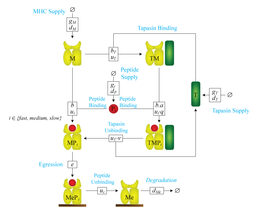
Quantitative Biology represents an interdisciplinary initiative under the umbrella of the Institute for Life Sciences. The remit is broad and targets applications of mathematical, computational and bioinformatics techniques to experimental biology and biomedicine, with a particular initial focus on Systems Biology and protein networks.
For queries about this topic, contact Richard Edwards.
View the calendar of events relating to this topic.
Projects
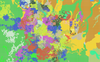
A spatially-explicit agent-based model of jaguar population dynamics
Jason Noble, Patrick Doncaster (Investigators), Angela Watkins
A single species spatially-explicit agent-based model has been developed that illustrates the role of simulation modelling, integrated with an adapted least-cost modelling approach and real-world geographical data, in exploring jaguar population dynamics.
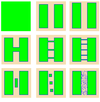
Agent-based simulations of jaguar movements through conservation corridors
Jason Noble, Patrick Doncaster (Investigators), Angela Watkins
We present an agent-based model of jaguars (Panthera onca),
scaled for fragmented habitat in Belize where proposals already exist for creating a jaguar corridor. We use a least cost approach to simulate movement paths through alternative possible landscapes.

Characterisation of the Genomic Landscape in Splenic Marginal Zone Lymphoma
Sarah Ennis, Jane Gibson, Jon Strefford (Investigators), Carolina Jaramillo Oquendo, Helen Parker
This project aims to expand the catalogue of mutated genes in splenic marginal zone lymphoma (SMZL) and construct a detailed characterisation of the genetic landscape of this disease. Using next generation sequencing, we aim to identify somatic mutations in over 100 samples, and enrich clinical data with this information to improve patient treatment and prognosis.
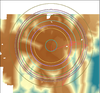
Integrating least-cost models with agent-based simulations: example hedgehog responses to fragmented landscapes
Jason Noble, Patrick Doncaster (Investigators), Angela Watkins
This study presents a novel analysis of an agent-based model of hedgehog movements integrated with a least-cost model of hedgehog dispersal and validated in landscapes with a varying degree of habitat fragmentation. A comparison of the fitness of individual agents reveals that incorporating a simple rule into
individual agents, to better mimic movement choices by real hedgehogs, dramatically affects the relationship between individual fitness and fragmentation.
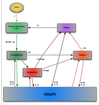
Lagrangian modelling of ecosystem dynamics at the Bermuda Atlantic Time-series Study station
Tom Anderson, Seth Bullock (Investigators), Melissa Saeland
Focus in the marine ecosystem modelling community is starting to shift towards the use of Lagrangian, agent-based models as these are believed to produce more realistic results. The basic assumptions behind these models have not been thoroughly tested, and this project aims to undertake a detailed study of Lagrangian marine ecosystem models, before creating one to investigate the dynamics at the Bermuda Atlantic Time-series Study station (BATS).
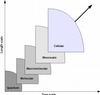
Multiscale Modelling of Cellular Calcium Signalling
Hans Fangohr, Jonathan Essex (Investigators), Dan Mason
Calcium ions play a vitally important role in signal transduction and are key to many cellular processes including muscle contraction and cell apoptosis (cell death). This importance has made calcium an active area in biomedical science and mathematical modelling.
Predicting Relative Protein Abundance via Sequence-Based Information
Gregory Parkes (Investigator), Mahesan Niranjan
Understanding the complex interactions between transcriptome and proteome is essential in uncovering cellular mechanisms both in health and disease contexts. The limited correlations between corresponding transcript and protein abundance suggest that regulatory processes tightly govern information flow surrounding transcription and translation, and beyond.
In this study we adopt an approach which expands the feature scope that models the human proteome: we develop machine learning models that incorporate sequence-derived features (SDFs), sometimes in conjunction with corresponding mRNA levels. We develop a large resource of sequence-derived features which cover a significant proportion of the H. sapiens proteome, demonstrate which of these features are significant in prediction on multiple cell lines, and suggest insights into which biological processes can be explained using these features.
We reveal that (a) SDFs are significantly better at protein abundance prediction across multiple cell lines both in steady-state and dynamic contexts, (b) that SDFs can cover the domain of translation with relative efficiency but struggle with cell-line specific pathways and (c) provide a resource which can be plugged into many subsequent protein-centric analyses.
Sample tracking in whole-exome sequencing projects
Andrew Collins, Sarah Ennis (Investigators), Reuben Pengelly
Whole-exome sequencing is entering clinical use for genetic investigations, and it is therefore essential that robust quality control is utilised. As such we designed and validated a tool to allow for unambiguous tying of patient data to a patient, to identify, and thus prevent errors such as the switching of samples during processing.
Sensitivity of the critical depth to the choice of particle movement rules in Lagrangian models and the consequences for the predicted timing of the spring bloom
Tom Anderson (Investigator), Melissa Saeland
Individual-based (Lagrangian) models lend themselves to the study of the controls of the spring bloom in the ocean, due to their ability to represent both the turbulence and the phytoplankton motion. Here, we use a Lagrangian phytoplankton model to test some of the most prevalent hypotheses (e.g. critical depth and critical turbulence).
Tag based transcriptome analysis of gene expression in a promising green algae
Richard Edwards (Investigator), Andreas Johansson
We use SuperSAGE in combination with next-generation sequencing to compare differences in gene expression between selected mutants and the wild type of a green algae. The data in the form of millions of 26 bp tags representing short stretches of expressed genes, will be analysed to find patterns of variation in gene expression under different conditions.

The application of next-generation sequencing to unresolved familial disease
Andrew Collins, Sarah Ennis (Investigators), Jane Gibson, Reuben Pengelly
Next-generation sequencing (NGS) allows us to sequence individual patients cost-effectively, allowing us to enter a new era of genomic medicine. The level of genetic detail that we can access through these methods is unprecedented making it suitable for clinical molecular diagnostics.
People
 Seth Bullock
Professor, Electronics and Computer Science (FPAS)
 Andrew Collins
Professor, Medicine (FM)
 Sarah Ennis
Professor, Medicine (FM)
 Jonathan Essex
Professor, Chemistry (FNES)
 Hans Fangohr
Professor, Engineering Sciences (FEE)
 Mahesan Niranjan
Professor, Electronics and Computer Science (FPAS)
 Jon Strefford
Professor, Medicine (FM)
 Patrick Doncaster
Reader, Biological Sciences (FNES)
 Thomas Blumensath
Senior Lecturer, Institute of Sound & Vibration Research (FEE)
Robert EwingSenior Lecturer, Biological Sciences (FNES)
Reuben PengellySenior Lecturer, Medicine (FM)
Christopher BellLecturer, Biological Sciences (FNES)
 Jane Gibson
Lecturer, Biological Sciences (FNES)
 Tom Anderson
Principal Research Fellow, National Oceanography Centre (FNES)
 Alistair Bailey
Research Fellow, Medicine (FM)
Petros BogiatzisResearch Fellow, Ocean & Earth Science (FNES)
 Jason Noble
Research Fellow, Electronics and Computer Science (FPAS)
 Joseph Egan
Postgraduate Research Student, Mathematics (FSHS)
Graham ElliottPostgraduate Research Student, Electronics and Computer Science (FPAS)
Carolina Jaramillo OquendoPostgraduate Research Student, Medicine (FM)
 Andreas Johansson
Postgraduate Research Student, National Oceanography Centre (FNES)
Harry LPostgraduate Research Student, Biological Sciences (FNES)
Gregory ParkesPostgraduate Research Student, Electronics and Computer Science (FPAS)
Maximillian PhippsPostgraduate Research Student, Chemistry (FNES)
 Sonya Ridden
Postgraduate Research Student, Mathematics (FSHS)
 Melissa Saeland
Postgraduate Research Student, National Oceanography Centre (FNES)
 Angela Watkins
Postgraduate Research Student, Biological Sciences (FNES)
Ella Marley-ZagarEnterprise staff, Medicine (FM)
 Richard Edwards
Alumnus, University of New South Wales, Australia
 Dan Mason
Alumnus, University of Southampton
Helen ParkerNone, None