Mayavi
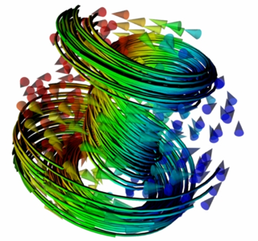
Mayavi (version 1, version 2) is a tool for easy and interactive visualization of (mostly 3d) data, providing seamless integration with Python scientific libraries.
It uses the Visualisation ToolKit (VTK) for the actual 3d rendering, and allows to create visualisations interactively and script based.
The Mayavi logo (as used on the Mayavi2 home page http://code.enthought.com/projects/mayavi/) has been produced by members of the Southampton Computational Modelling Group.
For queries about this topic, contact Hans Fangohr.
View the calendar of events relating to this topic.
Projects
Centre for Doctoral Training in Next Generation Computational Modelling
Hans Fangohr, Ian Hawke, Peter Horak (Investigators), Susanne Ufermann Fangohr, Thorsten Wittemeier, Kieran Selvon, Alvaro Perez-Diaz, David Lusher, Ashley Setter, Emanuele Zappia, Hossam Ragheb, Ryan Pepper, Stephen Gow, Jan Kamenik, Paul Chambers, Robert Entwistle, Rory Brown, Joshua Greenhalgh, James Harrison, Jonathon Waters, Ioannis Begleris, Craig Rafter
The £10million Centre for Doctoral Training was launched in November 2013 and is jointly funded by EPSRC, the University of Southampton, and its partners.
The NGCM brings together world-class simulation modelling research activities from across the University of Southampton and hosts a 4-year doctoral training programme that is the first of its kind in the UK.
Complexity in Modelling Electric Marine Propulsive Devices
Suleiman Sharkh, Neil Bressloff, Hans Fangohr (Investigators), Aleksander Dubas
This project involves the simulation of turbulent flow around a marine rim-driven thruster and the complex interaction of flow features involved through computational fluid dynamics. Following this, the optimisation of design parameters using computational fluid dynamics to calculate the objective function is performed and surrogate modelling utilised to estimate optimum design configuration.
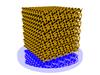
Computational electromagnetic modelling of 3D photonic structures
Marc Molinari, Darren Bagnall, Simon Cox (Investigators), Asa Asadollahbaik, Elizabeth Hart
Nano-structured materials can provide very specific and often very special optical effects which can be exploited for a large range of optical applications including wavelength filters, LEDs, micro-lasers, HDTV, solar-cell coatings, optical high-Q fibres, diffraction gratings, polarisation devices, optical switches, etc. This research in “Computational Electromagnetic Modelling of 3D Photonic Structures” aims to address the need for accurate and fast three-dimensional modelling, simulation and analysis processes in the photonics industry. A FEM/FDTD software suite will be developed to simulate Maxwell’s field equations and thin-film quantum effects (plasmons) in the visible and near-infrared EM frequency spectrum. The results obtained from running the software on suitable compute clusters will then be compared to the analysis results of experimentally manufactured materials. We will investigate structures occurring in nature such as iridescent butterfly wings, white/black reflecting beetle shells, etc., and aim to optimise artificially designed structures with periodic, quasi-periodic and random configurations.
Designer 3D Magnetic Mesostructures
Hans Fangohr (Investigator), Matteo Franchin, Andreas Knittel
A new electrodeposition self-assembly method allows for the growth of well defined mesostructures. This project's aim is to use this method in order to fabricate supraconducting and ferromagnetic mesostructures. Numerical methods based on well-established models are used in order to characterise the grown structures.

Directing magnetic skyrmion traffic flow with nanoscale patterning.
Hans Fangohr (Investigator), Mark Vousden
Skyrmions in magnetic nanostructures may lead to new data storage technologies. Appropriate simulation methodologies are developed and applied.
Dynamag: computational magnonics
Hans Fangohr, Atul Bhaskar (Investigators), Matteo Franchin, Andreas Knittel
Analytical treatment of long range magneto-dipole interactions is a bottle-neck of magnonics and more generally of the theory of spin waves in non-uniform media. This project develops a theoretical framework for analysis of magnonic phenomena in magnetic nano-structures, including isolated nano-elements, arrays of those, and extended magnonic crystals. The DYNAMAG project is funded by the EU FP7 and the DST of India.
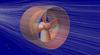
Fluid Dynamics Optimisation of Rim-Drive Thrusters and Ducted Hydrokinetic Generators
Aleksander Dubas, Suleiman Sharkh (Investigators)
This is a Knowledge Transfer Partnership project is a collaboration between the University of Southampton and TSL Technology Ltd. to develop computational fluid dynamics software design tools for modelling and optimising the design of propeller thrusters and water turbine generators.
Investigation into the Interfacial Physics of Field Effect Biosensors
Nicolas Green, Chris-Kriton Skylaris (Investigators), Benjamin Lowe
This interdisciplinary research aims to improve understanding of Field Effect Transistor Biosensors (Bio-FETs) and to work towards a multiscale model which can be used to better understand and predict device response.
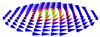
Nmag - computational micromagnetics
Hans Fangohr, Thomas Fischbacher (Investigators), Matteo Franchin, Andreas Knittel, Maximilian Albert, Dmitri Chernyshenko, Massoud Najafi, Richard Boardman
Nmag is a micromagnetic simulation package based on the general purpose multi-physics library nsim. It is developed by the group of Hans Fangohr and Thomas Fischbacher in the School of Engineering Sciences at the University of Southampton and released under the GNU GPL.

OpenDreamKit
Hans Fangohr (Investigator), Marijan Beg
OpenDreamKit is a [Horizon 2020](https://ec.europa.eu/programmes/horizon2020/) European Research Infrastructure project (#676541) providing substantial funding to the open-source computational mathematics ecosystem, and in particular popular tools such as LinBox, MPIR, SageMath, GAP, Pari/GP, LMFDB, Singular, MathHub, and the IPython/Jupyter interactive computing environment.
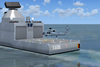
Real-time CFD for helicopter flight simulation
Kenji Takeda (Investigator), James Kenny
Project aims to show how real-time computational fluid dynamics (CFD) could be used to improve the realism of helicopter flight simulators.
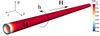
Reversal of ferromagnetic nanotubes
Hans Fangohr (Investigator), David Cortes
We are analysing the feasibility of reversing a nano scaled magnetic tube by applying weak pulses of currents through the nano-tube inner core
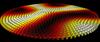
Stability of chiral structures in magnetic nanodisks
Hans Fangohr, Weiwei Wang (Investigators), David Cortes
This project is aimed to study the stability of skyrmionic and helical equilibrium states in magnetic nanodisks, using computational simulations.
People
 Darren Bagnall
Professor, Electronics and Computer Science (FPAS)
 Neil Bressloff
Professor, Engineering Sciences (FEE)
 Simon Cox
Professor, Engineering Sciences (FEE)
 Hans Fangohr
Professor, Engineering Sciences (FEE)
 Suleiman Sharkh
Professor, Engineering Sciences (FEE)
 Nicolas Green
Reader, Electronics and Computer Science (FPAS)
 Peter Horak
Reader, Optoelectronics Research Centre
 Atul Bhaskar
Senior Lecturer, Engineering Sciences (FEE)
 Prasanth Nair
Senior Lecturer, Engineering Sciences (FEE)
 Ian Hawke
Lecturer, Mathematics (FSHS)
 Chris-Kriton Skylaris
Lecturer, Chemistry (FNES)
 Richard Boardman
Senior Research Fellow, Engineering Sciences (FEE)
 Aleksander Dubas
Research Fellow, Engineering Sciences (FEE)
Elizabeth HartResearch Fellow, Engineering Sciences (FEE)
- -Postgraduate Research Student, Electronics and Computer Science (FPAS)
 Maximilian Albert
Postgraduate Research Student, Engineering Sciences (FEE)
 Asa Asadollahbaik
Postgraduate Research Student, Engineering Sciences (FEE)
 Ioannis Begleris
Postgraduate Research Student, Engineering Sciences (FEE)
 Rory Brown
Postgraduate Research Student, Civil Engineering & the Environment (FEE)
 Paul Chambers
Postgraduate Research Student, Engineering Sciences (FEE)
 David Cortes
Postgraduate Research Student, Engineering Sciences (FEE)
 Robert Entwistle
Postgraduate Research Student, Engineering Sciences (FEE)
 Stephen Gow
Postgraduate Research Student, Engineering Sciences (FEE)
 Joshua Greenhalgh
Postgraduate Research Student, Engineering Sciences (FEE)
 James Harrison
Postgraduate Research Student, Engineering Sciences (FEE)
Alex JamesPostgraduate Research Student, Institute of Sound & Vibration Research (FEE)
 Benjamin Lowe
Postgraduate Research Student, Electronics and Computer Science (FPAS)
 David Lusher
Postgraduate Research Student, Engineering Sciences (FEE)
 Alvaro Perez-Diaz
Postgraduate Research Student, Engineering Sciences (FEE)
 Daniel Powell
Postgraduate Research Student, Engineering Sciences (FEE)
 Craig Rafter
Postgraduate Research Student, Engineering Sciences (FEE)
 Hossam Ragheb
Postgraduate Research Student, Engineering Sciences (FEE)
 Kieran Selvon
Postgraduate Research Student, Engineering Sciences (FEE)
 Ashley Setter
Postgraduate Research Student, Engineering Sciences (FEE)
 Jonathon Waters
Postgraduate Research Student, Engineering Sciences (FEE)
 Thorsten Wittemeier
Postgraduate Research Student, Engineering Sciences (FEE)
 Emanuele Zappia
Postgraduate Research Student, Engineering Sciences (FEE)
 Petrina Butler
Administrative Staff, Research and Innovation Services
 Susanne Ufermann Fangohr
Administrative Staff, Civil Engineering & the Environment (FEE)
Stuart CurtisAlumnus, University of Southampton
 Thomas Fischbacher
Alumnus, Engineering Sciences (FEE)
 Matteo Franchin
Alumnus, Engineering Sciences (FEE)
 Jan Kamenik
Alumnus, University of Southampton
Kondwani KanjereAlumnus, Engineering Sciences (FEE)
 James Kenny
Alumnus, Engineering Sciences (FEE)
 Andreas Knittel
Alumnus, Industry
 Marc Molinari
Alumnus, Engineering Sciences (FEE)
 Massoud Najafi
Alumnus, Arbeitsbereich Technische Informatik Systeme, University of Hamburg, Germany
Alkin NasufAlumnus, Engineering Sciences (FEE)
 Kenji Takeda
Alumnus, Engineering Sciences (FEE)
 Weiwei Wang
Alumnus, Ningbo University
 Marijan Beg
External Member, Imperial College London
 Mark Vousden
External Member, University of Southampton