Database

Research on databases and data storage, including linking metadata to flat files and other datastores, management of large datasets, distribution, access and security.
For queries about this topic, contact Richard Boardman.
View the calendar of events relating to this topic.
Projects
Application of RNA-Seq for gene fusion identification in blood cancers
William Tapper (Investigator), Marcin Knut
Gene fusions are often the cause of different blood cancers. As such, accurate identification of them provides information on the underlying cause of a cancer, ensuring appropriate choice of treatment. However, due to shortcomings of the currently applied methods for gene fusion identification, some of them escape undetected. We are employing RNA-Seq, a cutting-edge method for sequencing RNA, the messenger of genetic information, to investigate gene fusions.
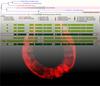
Bioinformatic identification and physiological analysis of ethanol-related genes in C. elegans
Richard Edwards, Vincent O'Connor, Lindy Holden-Dye (Investigators), Ben Ient
Investigating the broad molecular, cellular and systems level impacts of acute and chronic ethanol in the nematode, Caenorhabditis elegans, as a model.
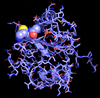
BioSimGrid
Jonathan Essex, Hans Fangohr (Investigators), Richard Boardman, Syma Khalid, Steven Johnston
The aim of the BioSimGrid project is to make the results of large-scale computer simulations of biomolecules more accessible to the biological community. Such simulations of the motions of proteins are a key component in understanding how the structure of a protein is related to its dynamic function.

Characterisation of the Genomic Landscape in Splenic Marginal Zone Lymphoma
Sarah Ennis, Jane Gibson, Jon Strefford (Investigators), Carolina Jaramillo Oquendo, Helen Parker
This project aims to expand the catalogue of mutated genes in splenic marginal zone lymphoma (SMZL) and construct a detailed characterisation of the genetic landscape of this disease. Using next generation sequencing, we aim to identify somatic mutations in over 100 samples, and enrich clinical data with this information to improve patient treatment and prognosis.
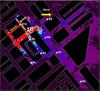
DIPLOS - Dispersion of Localised Releases in a Street Network
Trevor Thomas, Ian Castro (Investigators)
The security threat level from international terrorism, introduced by the UK Security Service, has been classified as either "severe" or "critical" for much of its six-year history, and currently remains as "substantial" (source: MI5 website). Part of the risk posed by terrorist threats involves potential releases of air-borne chemical, biological, radiological or nuclear (CBRN) material into highly populated urbanised areas. Smoke from industrial accidents within or in the vicinity of urban areas also pose risks to health and can cause widespread disruption to businesses, public services and residents. The Buncefield depot fire of 2005 resulted in the evacuation of hundreds of homes and closure of more than 200 schools and public buildings for two days; consequences would have been much more severe if prevailing meteorological conditions had promoted mixing or entrainment of the smoke plume into the urban canopy. In both these scenarios it is crucial to be able to model, quickly and reliably, dispersion from localised sources through an urban street network in the short range, where the threat to human health is greatest. However, this is precisely where current operational models are least reliable because our understanding and ability to model short-range dispersion processes is limited. The contribution that DIPLOS will make is:
1. to fill in the gaps in fundamental knowledge and understanding of key dispersion processes,
2. to enable these processes to be parametrized for use in operational models,
3. to implement them into an operational model, evaluate the improvement and apply the model to a case study in central London
Most of the existing research on urban dispersion has focused on air quality aspects, with sources being extensive and distributed in space. Scientifically, this research is novel in focusing on localized releases within urban areas, and on dispersion processes at short range. Through a combination of fundamental studies using wind tunnel experiments and high resolution supercomputer simulations, extensive data analysis and development of theoretical and numerical models, DIPLOS will contribute to addressing this difficult and important problem from both a scientific research and a practical, operational perspective.
Identification of phage DNA, common insertion sites and their effect on genes within S.pneumoniae
Richard Edwards, Amy Dean
This study seeks to find if there are any common insertion sites across different strains of S.pneumoniae and discover genes that undergo frequent mutation due to phages and if these mutations can be linked to virulence of the strains.
Modelling Macro-Nutrient Release & Fate Resulting from Sediment Resuspension in Shelf Seas
Chris Wood
This study involves adapting a previously-published model to take into account the effect resuspension events (both natural and anthropogenic) may have on nutrient dynamics at the sediment-water interface, and hence produce better estimates for the total nutrient budgets for shelf seas.
Network Analysis of Roman Transport Routes in the Imperial Roman Mediterranean
David Potts
This research is designed to explore the nature of the relationships between Portus, Rome, and other selected ports in the Mediterranean and to establish patterns and the changing nature of trading networks derived from the distribution of known Roman artefacts.
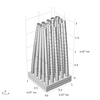
Optical Characterisation of Black Silicon for Photovoltaics Using the Finite Element Method
Jack Tyson (Investigator)
Here we present a novel method of simulating the reflectance spectra of black silicon solar cells using the finite element method. Designed in COMSOL Multiphysics is a new set of algorithm-controlled-geometries rendering a vast array of different structural permutations of silicon nanowires. Our model focused on the variation of this geometry within customisable predefined conditions in large output quantities, collated and averaged to reliably determine the reflectance of an entire black silicon solar cell.
Prediction of Psychopathology by MRT data
We aim to predict psychopathological outcomes in adults by functional brain data using multilevel regression and crossvaligdation strategies.
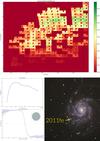
Supernova Rates in the Local Universe
Mark Sullivan (Investigator), Christopher Frohmaier
This project will calculate the frequency of exploding stars -- or supernovae -- in the nearby universe. We simulate a 'toy universe' by exploding billions of stars in a computer, and then artificially 'observing' these explosions by replicating a real astronomical sky survey, the Palomar Transient Factory (PTF). The results of this simulation allows us to discover the rate at which supernovae occur in the local universe each year.
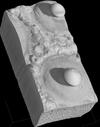
µ-VIS Computed Tomography Centre
Ian Sinclair, Richard Boardman, Dmitry Grinev, Philipp Thurner, Simon Cox, Jeremy Frey, Mark Spearing, Kenji Takeda (Investigators)
A dedicated centre for computed tomography (CT) at Southampton, providing complete support for 3D imaging science, serving Engineering, Biomedical, Environmental and Archaeological Sciences. The centre encompasses five complementary scanning systems supporting resolutions down to 200nm and imaging volumes in excess of one metre: from a matchstick to a tree trunk, from an ant's wing to a gas turbine blade.
People
 Andrew Collins
Professor, Medicine (FM)
 Simon Cox
Professor, Engineering Sciences (FEE)
 Graeme Day
Professor, Chemistry (FNES)
 Sarah Ennis
Professor, Medicine (FM)
 Jonathan Essex
Professor, Chemistry (FNES)
 Hans Fangohr
Professor, Engineering Sciences (FEE)
 Jeremy Frey
Professor, Chemistry (FNES)
 Lindy Holden-Dye
Professor, Biological Sciences (FNES)
 Ian Sinclair
Professor, Engineering Sciences (FEE)
 Mark Spearing
Professor, Engineering Sciences (FEE)
 Jon Strefford
Professor, Medicine (FM)
Nicolas GreenReader, Electronics and Computer Science (FPAS)
 Vincent O'Connor
Reader, Biological Sciences (FNES)
 Paul Skipp
Reader, Biological Sciences (FNES)
Robert EwingSenior Lecturer, Biological Sciences (FNES)
Mohamed BakoushLecturer, Management (FBL)
 Jane Gibson
Lecturer, Biological Sciences (FNES)
 Denis Kramer
Lecturer, Engineering Sciences (FEE)
 Trevor Thomas
Lecturer, Engineering Sciences (FEE)
 Philipp Thurner
Lecturer, Engineering Sciences (FEE)
 Syma Khalid
Principal Research Fellow, Chemistry (FNES)
Mark SullivanPrincipal Research Fellow, Physics & Astronomy (FPAS)
 Richard Boardman
Senior Research Fellow, Engineering Sciences (FEE)
 Reno Choi
Senior Research Fellow, Geography (FSHS)
Petros BogiatzisResearch Fellow, Ocean & Earth Science (FNES)
Nicola De TullioResearch Fellow, Engineering Sciences (FEE)
Btissam Er-RahmadiResearch Fellow, Management (FBL)
Dmitry GrinevResearch Fellow, Engineering Sciences (FEE)
 Steven Johnston
Research Fellow, Engineering Sciences (FEE)
Leonidas BourikasPostgraduate Research Student, Civil Engineering & the Environment (FEE)
Graham ElliottPostgraduate Research Student, Electronics and Computer Science (FPAS)
 Christopher Frohmaier
Postgraduate Research Student, Physics & Astronomy (FPAS)
 Tom Hebbron
Postgraduate Research Student, Electronics and Computer Science (FPAS)
Carolina Jaramillo OquendoPostgraduate Research Student, Medicine (FM)
 Joshua Jeeson Daniel
Postgraduate Research Student, Engineering Sciences (FEE)
Marcin KnutPostgraduate Research Student, Medicine (FM)
 David Potts
Postgraduate Research Student, Humanities (FH)
Jack TysonPostgraduate Research Student, Electronics and Computer Science (FPAS)
Chris WoodPostgraduate Research Student, Ocean & Earth Science (FNES)
Matthew HigginsUndergraduate Research Student, Biological Sciences (FNES)
 Elena Vataga
Technical Staff, iSolutions
 Petrina Butler
Administrative Staff, Research and Innovation Services
Ella Marley-ZagarEnterprise staff, Medicine (FM)
Amy DeanAlumnus, former UG, Biological Sciences
 Richard Edwards
Alumnus, University of New South Wales, Australia
Ben IentAlumnus, Biological Sciences (FNES)
 Arthur Lugtigheid
Alumnus, Psychology (FSHS)
Kieren LythgowAlumnus, Health Protection Agency
 Mohsen Mesgarpour
Alumnus, University of Southampton
 Kenji Takeda
Alumnus, Engineering Sciences (FEE)
 Daniel Pope
External Member, Mauve Internet Ltd.
Ian CastroNone, None
Stephen GreenNone, None
Helen ParkerNone, None
Daisuke SasakiNone, None
William TapperNone, None