Optimisation
For queries about this topic, contact Frank McGroarty.
View the calendar of events relating to this topic.
Projects
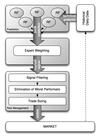
Automated Trading with Performance Weighted Random Forests and Seasonality
Frank McGroarty, Enrico Gerding (Investigators), Ash Booth
This project proposes an expert system that uses novel machine learning techniques to predict the price return over these seasonal events, and then uses these predictions to develop a profitable trading strategy.

Care Life Cycle
Seth Bullock, Sally Brailsford, Jason Noble, Jakub Bijak (Investigators), Elisabeth zu-Erbach-Schoenberg, Jason Hilton, Jonathan Gray
This research programme brings together teams of researchers from social sciences, management science and complexity science to develop a suite of models representing the socio-economic and demographic processes and organisations implicated in the UK’s health and social care provision. Integral to the project is working with our partners in the public sector and communicating the results of these models to policymakers allowing them to effectively plan for the future.
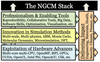
Centre for Doctoral Training in Next Generation Computational Modelling
Hans Fangohr, Ian Hawke, Peter Horak (Investigators), Susanne Ufermann Fangohr, Thorsten Wittemeier, Kieran Selvon, Alvaro Perez-Diaz, David Lusher, Ashley Setter, Emanuele Zappia, Hossam Ragheb, Ryan Pepper, Stephen Gow, Jan Kamenik, Paul Chambers, Robert Entwistle, Rory Brown, Joshua Greenhalgh, James Harrison, Jonathon Waters, Ioannis Begleris, Craig Rafter
The £10million Centre for Doctoral Training was launched in November 2013 and is jointly funded by EPSRC, the University of Southampton, and its partners.
The NGCM brings together world-class simulation modelling research activities from across the University of Southampton and hosts a 4-year doctoral training programme that is the first of its kind in the UK.
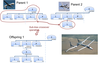
Challenging Topological Prejudice - Automated Airframe Layout Design
Andras Sobester (Investigator), Paul Chambers
Aircraft preliminary design scopes are drastically narrowed by topological prejudice. Modern aircraft have settled on the same 'tube plus wing and cruciform tail' type topology that has been adopted through their ancestry, with no scientific evidence that this layout is optimal. This research project poses the question:
“Given a topologically flexible aircraft geometry that is free of prejudice or bias, would a sophisticated multi-disciplinary optimization process yield a conventional layout?”
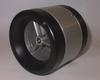
Complexity in Modelling Electric Marine Propulsive Devices
Suleiman Sharkh, Neil Bressloff, Hans Fangohr (Investigators), Aleksander Dubas
This project involves the simulation of turbulent flow around a marine rim-driven thruster and the complex interaction of flow features involved through computational fluid dynamics. Following this, the optimisation of design parameters using computational fluid dynamics to calculate the objective function is performed and surrogate modelling utilised to estimate optimum design configuration.
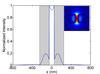
Continuously Tunable Optical Buffer
Peter Horak (Investigator)
The project aims to design, fabricate and test a novel integrated all-optical buffer device that is based on MEMS technology and provides a continuously tunable delay for optical pulses over a broad wavelength region. Such a device could play a crucial role in future packet-switched optical networks, photonic integrated circuits and coherent light based applications such as optically steered phase array antennas, LIDAR and optical coherence tomography.
This EPSRC funded project is a collaboration between the Optoelectronics Research Centre, Southampton, and University College London.
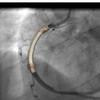
Coronary Artery Stent Design for Challenging Disease
Neil Bressloff (Investigator), Georgios Ragkousis
In this work, a method has been setup to (i) reconstruct diseased patient specific coronary artery segments; (ii) use the new supercomputer to run many simulations of this complex problem and (iii) assess the degree of stent malapposition. The aim now is to devise a stent delivery system that can mitigate this problem
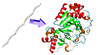
Deep Optimisation
Jamie Caldwell
The project will develop the implementation and application of a new optimisation technique. 'Deep optimisation' combines deep learning techniques in neural networks with distributed optimisation methods to create a dynamically re-scalable optimisation process. This project will develop this technique to better-understand its capabilities and limitations and develop GPU implementations. The protein structure prediction problem will be used as the main test application.

Fluid Dynamics Optimisation of Rim-Drive Thrusters and Ducted Hydrokinetic Generators
Aleksander Dubas, Suleiman Sharkh (Investigators)
This is a Knowledge Transfer Partnership project is a collaboration between the University of Southampton and TSL Technology Ltd. to develop computational fluid dynamics software design tools for modelling and optimising the design of propeller thrusters and water turbine generators.
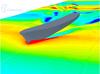
Fluid Loads and Motions of Damaged Ships
Dominic Hudson, Ming-yi Tan (Investigators), Christian Wood, James Underwood, Adam Sobey
An area of research currently of interest in the marine industry is the effect of damage on ship structures. Research into the behaviour of damaged ships began in the mid nineties as a result of Ro-Ro disasters (e.g. Estonia in 1994). Due to the way the Estonia sank early research mainly focused on transient behaviour immediately after the damage takes place, the prediction of capsize, and of large lateral motions. Further research efforts, headed by the UK MoD, began following an incident where HMS Nottingham ran aground tearing a 50m hole from bow to bridge, flooding five compartments and almost causing the ship to sink just off Lord Howe Island in 2002. This project intends to answer the following questions:
“For a given amount of underwater damage (e.g. collision or torpedo/mine hit), what will be the progressive damage spread if the ship travels at ‘x’ knots? OR for a given amount of underwater damage, what is the maximum speed at which the ship can travel without causing additional damage?”
Generating Optimal Ensembles of Earth System Models
Simon Cox (Investigator), Elizabeth Hart, Andras Sobester
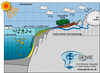
GENIE is an Earth system model of intermediate complexity. As with other climate models, the tuning of its parameters is essential for providing reliable long-term forecasts of Earth system behaviour. We apply a multi-objective optimization algorithm to the problem. The aim of the tuning exercise is to find the optimal values for the free parameters that produce and euqilibrium model end state with the closest fit to equivalent observational data.
Measuring biomolecules - improvements to the spectroscopic ruler
Pavlos Lagoudakis, Tom Brown (Investigators), Jan Junis Rindermann, James Richardson
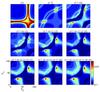
The spectroscopic ruler is a technique to measure the geometry of biomolecules on the nm scale by labeling them with pairs of fluorescent markers and measuring distance dependent non-radiative energy transfer between them. The remaining uncertainty in the application of the technique originates from the unknown orientation between the optical dipole moments of the fluorescent markers, especially when the molecule undergoes thermal fluctuations in physiological conditions. Recently we introduced a simulation based method for the interpretation of the fluorescence decay dynamics of the markers that allows us to retrieve both the average orientation and the extent of directional fluctuations of the involved dipole moments.
Modelling Macro-Nutrient Release & Fate Resulting from Sediment Resuspension in Shelf Seas
Chris Wood
This study involves adapting a previously-published model to take into account the effect resuspension events (both natural and anthropogenic) may have on nutrient dynamics at the sediment-water interface, and hence produce better estimates for the total nutrient budgets for shelf seas.
Multi-objective design optimisation of coronary stents
Neil Bressloff, Georges Limbert (Investigators), Sanjay Pant
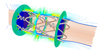
Stents are tubular type scaffolds that are deployed (using an inflatable balloon on a catheter), most commonly to recover the shape of narrowed (diseased) arterial segments. Despite the widespread clinical use of stents in cardiovascular intervention, the presence of such devices can cause adverse responses leading to fatality or to the need for further treatment. The most common unwanted responses of inflammation are in-stent restenosis and thrombosis. Such adverse biological responses in a stented artery are influenced by many factors, including the design of the stent. This project aims at using multi-objective optimisation techniques to find an optimum family of coronary stents which are more resistant to the processes of in-stent restenosis (IR) and stent thrombosis (ST).

OCCASION: Overcoming Capacity Constraints - A Simulation Integrated with Optimisation for Nodes
Tolga Bektas (Investigator)
OCCASION is a collaboration between TRG and the Schools of Mathematics and Management. The project's objective is to identify and investigate innovative methods of increasing the capacity of nodes (i.e. junctions and stations) on the railway network, without substantial investment in additional infrastructure. To this end, a state-of-the-art review of recent and ongoing work in this area will be conducted, followed by the development of tools to (i) assess existing levels of capacity utilisation at nodes, and (ii) investigate options for re-routeing and re-scheduling trains, with a view to reducing capacity utilisation levels. These tools will be used in combination to develop solutions delivering reduced levels of capacity utilisation, and thus increases in capacity and/or service reliability. Incremental changes to existing railway technologies (e.g. improved points) and operating practice (e.g. relaxations of the Rules of the Plan) will be investigated, as will concepts from other modes (e.g. road and air transport) and sectors (e.g. production scheduling).
Optimisation of Acoustic Systems for Perceived Sound Quality
Jordan Cheer (Investigator), Daniel Wallace
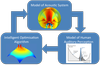
Acoustic systems have traditionally been optimised on the basis of minimising an objective acoustic measure, such as sound pressure level. The project investigates the use of subjective measures of sound quality, such as "loudness", "harshness" etc. in optimisation algorithms.
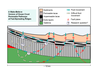
Porous Media and Hydrothermal Circulation in Weakened Ocean Crust
Formation of oceanic crust is an interplay between magma and the cooling hydrothermal system above that its own heat drives. To understand this system we must understand where and how water circulates through the crust.
Ocean crust is riddled with faults and other permeable pathways along which water preferentially flows. We seek to use basic numerical models of circulation in porous media to understand how much of an influence on crust formation these anomalous features have, compared to the bulk, unfractured crust.
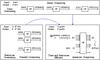
Quantum Computation for Signal Detection in Multiple-Input Multiple-Output Communication Systems
Lajos Hanzo (Investigator), Panagiotis Botsinis
Optimal, classic optimization processes in communication systems, such as signal detection, introduce an extremely high computational complexity in the system. Quantum computation offers the optimal equivalent algorithms in the quantum domain, with at least a quadratic degradation in complexity. Since quantum computers have still not been physically realized though, the quantum algorithms' simulation's complexity is higher than that of the optimal classic equivalents. Use of Iridis is essential in facilitating their simulation.
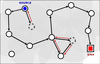
Scalability of Energy Efficient Routing Algorithms in Wireless Sensor Networks
Geoff Merrett (Investigator), Davide Zilli
This project compares two broad classes of routing algorithms for Wireless Sensor Networks, message flooding and single path, by means of a simulation model. In particular, we want to understand how the two scale in terms of energy efficiency on large networks of sensors.
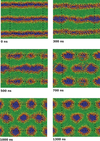
Simulation of biological systems at long length and distance scales
Jonathan Essex (Investigator), Kieran Selvon
This project aims to shed light on cell membrane mechanisms which are difficult to probe experimentally, in particular drug permiation across the cell membrane. If one had a full understanding of the mechanism, drugs could be designed to target particular embedded proteins to improve their efficacy, the viability of nano based medicines and materials could also be assessed, testing for toxicity etc.
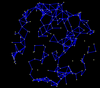
Spatially Embedded Complex Systems Engineering
Seth Bullock (Investigator)
SECSE brought together an interdisciplinary team of scientists working on an ambitious three-and-a-half year project titled. The research cluster spanned neuroscience, artificial intelligence, geography, and complex systems in an attempt to understand the role of spatial organization and spatial processes in complex networks within the domains of neural control, geo-information systems and distributed IT systems such as those implicated in air-traffic control.
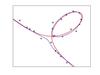
Structured low-rank approximation
Ivan Markovsky
Today's state-of-the-art methods for data processing are model based. We propose a fundamentally new approach that does not depend on an explicit model representation and can be used for model-free data processing. From a theoretical point of view, the prime advantage of the newly proposed paradigm is conceptual unification of existing methods. From a practical point of view, the proposed paradigm opens new possibilities for development of computational methods for data processing.
Sustainable domain-specific software generation tools for extremely parallel particle-based simulations
Chris-Kriton Skylaris (Investigator)
A range of particle based methods (PBM) are currently used to simulate materials in chemistry, engineering, physics and biophysics. The 4 types of PBM considered directly in the proposed are molecular dynamics (MD), the ONETEP quantum mechanics-based program, discrete element modelling (DEM), and smoothed particle hydrodynamics (SPH).
The overall research objective is to develop a sustainable tool that will deliver, in the future, cutting edge research applicable to applications ranging from dam engineering to atomistic drug design.
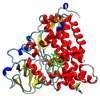
The hydrogen abstraction phase of the CYP-cyclohexene reaction, using large-scale DFT
Chris-Kriton Skylaris (Investigator), Chris Pittock, Karl Wilkinson
Studying the hydrogen-abstraction reaction between cyclohexene and the active site of cytochrome P450. This starts a series of reactions that eventually oxidise the small molecule to become either an epoxide or an alcohol.
Understanding the finer detail of this reaction can assist towards a model that will predict the breakdown of drugs in the human body.
The ONETEP project
Chris-Kriton Skylaris (Investigator), Stephen Fox, Chris Pittock, Álvaro Ruiz-Serrano, Jacek Dziedzic
Program for large-scale quantum mechanical simulations of matter from first principles quantum mechanics. Based on theory and algorithms we have developed for linear-scaling density functional theory calculations on parallel computers.
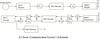
The Perks of Complexity Reduction
Lajos Hanzo (Investigator), Chao Xu
Reliable high-speed modems facilitate ubiquitous communications in our daily lives amongst people and/or machines. The communication technologies we need for the future have to have a high reliability and a low cost. My research aims for reducing the complexity of state-of-the-art communication systems, so that they can communicate in real time at an increased throughput. Naturally having access to parallel computers such as Iridis gives my research a competitive advantage over other researchers, relying on slower simulations.
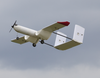
The use of channel wings for slow speed UAV flight
Andy Keane (Investigator), Juraj Mihalik
In this project, advanced computational modeling and robust design optimization tools are used to observe the possibility of use of the Custer channel wings for slow speed UAV flights.
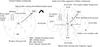
Today's Computation Enabling Tomorrow's Seamless Communication
Lajos Hanzo (Investigator), Varghese Thomas
Radio Over Fibre (ROF) is a communication technique that aims to gainfully amalgamate the benefits of optical and wireless communication, while keeping the system cost low. This technique would support the next generation of wireless services.
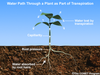
Validation of a spatial-temporal soil water movement and plant water uptake model
Tiina Roose, Sevil Payvandi (Investigators), James Heppell
We develop a model that estimates the water saturation level within the soil at different depths, and the uptake of water by the root system. Data from Smethurst et al (2012) is used to validate our model and obtain a fully calibrated system for plant water uptake. When compared quantitatively to other models such as CROPWAT, our model achieves a better fit to the experimental data because of the simpler, first, second and third order terms present in the boundary condition, as opposed to complicated non-linear functions.

Variability in high pressure blade trailing edge geometry and its impact on stage capacity and blade temperature
Andy Keane (Investigator), Jan Kamenik
My project involves the trailing edge (TE) geometry of gas turbine high pressure turbine blades, which is subject to inevitable variability due to the manufacturing processes involved.
People
 Tolga Bektas
Professor, Management (FBL)
 Jakub Bijak
Professor, Social Sciences (FSHS)
 Sally Brailsford
Professor, Management (FBL)
 Neil Bressloff
Professor, Engineering Sciences (FEE)
 Tom Brown
Professor, Chemistry (FNES)
 Seth Bullock
Professor, Electronics and Computer Science (FPAS)
Andrew CollinsProfessor, Medicine (FM)
 Simon Cox
Professor, Engineering Sciences (FEE)
 Graeme Day
Professor, Chemistry (FNES)
 Jonathan Essex
Professor, Chemistry (FNES)
 Hans Fangohr
Professor, Engineering Sciences (FEE)
 Lajos Hanzo
Professor, Electronics and Computer Science (FPAS)
 Andy Keane
Professor, Engineering Sciences (FEE)
 Pavlos Lagoudakis
Professor, Physics & Astronomy (FPAS)
 Frank McGroarty
Professor, Management (FBL)
 Suleiman Sharkh
Professor, Engineering Sciences (FEE)
 Peter Horak
Reader, Optoelectronics Research Centre
 Tiina Roose
Reader, Engineering Sciences (FEE)
 Thomas Blumensath
Senior Lecturer, Institute of Sound & Vibration Research (FEE)
 Dominic Hudson
Senior Lecturer, Engineering Sciences (FEE)
Mohamed BakoushLecturer, Management (FBL)
Stefanie BiedermannLecturer, Southampton Statistical Sciences Research Institute (FSHS)
Jordan CheerLecturer, Institute of Sound & Vibration Research (FEE)
 Gwenael Gabard
Lecturer, Institute of Sound & Vibration Research (FEE)
 Ian Hawke
Lecturer, Mathematics (FSHS)
 Dina Shona Laila
Lecturer, Engineering Sciences (FEE)
 Georges Limbert
Lecturer, Engineering Sciences (FEE)
 Ivan Markovsky
Lecturer, Electronics and Computer Science (FPAS)
 Geoff Merrett
Lecturer, Electronics and Computer Science (FPAS)
Marcus NewtonLecturer, Physics & Astronomy (FPAS)
 Chris-Kriton Skylaris
Lecturer, Chemistry (FNES)
 Andras Sobester
Lecturer, Engineering Sciences (FEE)
 Ming-yi Tan
Lecturer, Engineering Sciences (FEE)
 Anatoliy Vorobev
Lecturer, Engineering Sciences (FEE)
 Francesco Poletti
Senior Research Fellow, Optoelectronics Research Centre
Rie SugimotoSenior Research Fellow, Institute of Sound & Vibration Research (FEE)
 Philip Williamson
Senior Research Fellow, Biological Sciences (FNES)
 Guy Abel
Research Fellow, Social Sciences (FSHS)
Petros BogiatzisResearch Fellow, Ocean & Earth Science (FNES)
Nicola De TullioResearch Fellow, Engineering Sciences (FEE)
 Aleksander Dubas
Research Fellow, Engineering Sciences (FEE)
 Jacek Dziedzic
Research Fellow, Chemistry (FNES)
Btissam Er-RahmadiResearch Fellow, Management (FBL)
Elizabeth HartResearch Fellow, Engineering Sciences (FEE)
 Rob Mills
Research Fellow, Electronics and Computer Science (FPAS)
 Jason Noble
Research Fellow, Electronics and Computer Science (FPAS)
 Sevil Payvandi
Research Fellow, Engineering Sciences (FEE)
James RichardsonResearch Fellow, Chemistry (FNES)
Karl WilkinsonResearch Fellow, Chemistry (FNES)
 Ioannis Begleris
Postgraduate Research Student, Engineering Sciences (FEE)
 Harry Beviss
Postgraduate Research Student, Electronics and Computer Science (FPAS)
 Ash Booth
Postgraduate Research Student, Electronics and Computer Science (FPAS)
 Panagiotis Botsinis
Postgraduate Research Student, Electronics and Computer Science (FPAS)
 Rory Brown
Postgraduate Research Student, Civil Engineering & the Environment (FEE)
 Jamie Caldwell
Postgraduate Research Student, Engineering Sciences (FEE)
Daniel CerninPostgraduate Research Student, Mathematics (FSHS)
 Paul Chambers
Postgraduate Research Student, Engineering Sciences (FEE)
Michael ChesnayePostgraduate Research Student, Institute of Sound & Vibration Research (FEE)
 Christopher Crispin
Postgraduate Research Student, Engineering Sciences (FEE)
 Enrique Cuan-Urquizo
Postgraduate Research Student, Engineering Sciences (FEE)
 Samuel Diserens
Postgraduate Research Student, Engineering Sciences (FEE)
 Robert Entwistle
Postgraduate Research Student, Engineering Sciences (FEE)
Stephen FoxPostgraduate Research Student, Chemistry (FNES)
 Stephen Gow
Postgraduate Research Student, Engineering Sciences (FEE)
 Jonathan Gray
Postgraduate Research Student, Social Sciences (FSHS)
 Joshua Greenhalgh
Postgraduate Research Student, Engineering Sciences (FEE)
 James Harrison
Postgraduate Research Student, Engineering Sciences (FEE)
 James Heppell
Postgraduate Research Student, Electronics and Computer Science (FPAS)
 Jason Hilton
Postgraduate Research Student, Social Sciences (FSHS)
 Joshua Jeeson Daniel
Postgraduate Research Student, Engineering Sciences (FEE)
Konstantinos KouvarisPostgraduate Research Student, Electronics and Computer Science (FPAS)
 David Lusher
Postgraduate Research Student, Engineering Sciences (FEE)
 Sam Mangham
Postgraduate Research Student, Electronics and Computer Science (FPAS)
 Juraj Mihalik
Postgraduate Research Student, Engineering Sciences (FEE)
 Walton P. Coutinho
Postgraduate Research Student, Mathematics (FSHS)
Sanjay PantPostgraduate Research Student, Engineering Sciences (FEE)
 Alvaro Perez-Diaz
Postgraduate Research Student, Engineering Sciences (FEE)
 Lyuboslav Petrov
Postgraduate Research Student, Electronics and Computer Science (FPAS)
 Chris Pittock
Postgraduate Research Student, Chemistry (FNES)
 Daniel Powell
Postgraduate Research Student, Engineering Sciences (FEE)
Stephen PowellPostgraduate Research Student, Engineering Sciences (FEE)
 Craig Rafter
Postgraduate Research Student, Engineering Sciences (FEE)
 Hossam Ragheb
Postgraduate Research Student, Engineering Sciences (FEE)
 Georgios Ragkousis
Postgraduate Research Student, Engineering Sciences (FEE)
 Jan Junis Rindermann
Postgraduate Research Student, Physics & Astronomy (FPAS)
 Álvaro Ruiz-Serrano
Postgraduate Research Student, Chemistry (FNES)
Jack SaywellPostgraduate Research Student, Engineering Sciences (FEE)
 Kieran Selvon
Postgraduate Research Student, Engineering Sciences (FEE)
 Ashley Setter
Postgraduate Research Student, Engineering Sciences (FEE)
Adam SobeyPostgraduate Research Student, Engineering Sciences (FEE)
 Massimo Stella
Postgraduate Research Student, Electronics and Computer Science (FPAS)
 Alex Stuikys
Postgraduate Research Student, Electronics and Computer Science (FPAS)
 James Underwood
Postgraduate Research Student, Engineering Sciences (FEE)
Johannes Van Der HorstPostgraduate Research Student, Electronics and Computer Science (FPAS)
 Daniel Wallace
Postgraduate Research Student, Engineering Sciences (FEE)
 Jonathon Waters
Postgraduate Research Student, Engineering Sciences (FEE)
 Iain Weaver
Postgraduate Research Student, Electronics and Computer Science (FPAS)
 Thorsten Wittemeier
Postgraduate Research Student, Engineering Sciences (FEE)
Chris WoodPostgraduate Research Student, Ocean & Earth Science (FNES)
 Martin Wood
Postgraduate Research Student, Ocean & Earth Science (FNES)
Chao XuPostgraduate Research Student, Electronics and Computer Science (FPAS)
 Emanuele Zappia
Postgraduate Research Student, Engineering Sciences (FEE)
 Davide Zilli
Postgraduate Research Student, Electronics and Computer Science (FPAS)
 Elisabeth zu-Erbach-Schoenberg
Postgraduate Research Student, Management (FBL)
Jess JonesTechnical Staff, iSolutions
 Elena Vataga
Technical Staff, iSolutions
 Petrina Butler
Administrative Staff, Research and Innovation Services
 Susanne Ufermann Fangohr
Administrative Staff, Civil Engineering & the Environment (FEE)
 Erika Quaranta
Enterprise staff, Engineering Sciences (FEE)
 Jan Kamenik
Alumnus, University of Southampton
Kondwani KanjereAlumnus, Engineering Sciences (FEE)
 Mohsen Mesgarpour
Alumnus, University of Southampton
Alkin NasufAlumnus, Engineering Sciences (FEE)
Ahsan Thaivalappil Abdul HameedAlumnus, University of Southampton
 Moresh Wankhede
Alumnus, Dacolt International B.V.
 Christian Wood
Alumnus, Engineering Sciences (FEE)
 Ian Bush
External Member, NAG Ltd, Oxford
 Mark Vousden
External Member, University of Southampton
Enrico GerdingNone, None
Daisuke SasakiNone, None
Doroteya StaykovaNone, None
Varghese ThomasNone, None
Sheng YangNone, None