Biomolecular Organisation
For queries about this topic, contact Syma Khalid.
View the calendar of events relating to this topic.
Projects
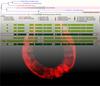
Bioinformatic identification and physiological analysis of ethanol-related genes in C. elegans
Richard Edwards, Vincent O'Connor, Lindy Holden-Dye (Investigators), Ben Ient
Investigating the broad molecular, cellular and systems level impacts of acute and chronic ethanol in the nematode, Caenorhabditis elegans, as a model.
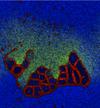
Cellular Automata Modelling of Membrane Formation and Protocell Evolution
Seth Bullock (Investigator), Stuart Bartlett
We simulated the meso-level behaviour of lipid-like particles in a range of chemical and physical environments. Self-organised protocellular structures can be shown to emerge spontaneously in systems with random, homogeneous initial conditions. Introducing an additional 'toxic' particle species and an associated set of synthesis reactions produced a new set of ecological behaviours compared to the original model of Ono and Ikegami.
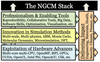
Centre for Doctoral Training in Next Generation Computational Modelling
Hans Fangohr, Ian Hawke, Peter Horak (Investigators), Susanne Ufermann Fangohr, Thorsten Wittemeier, Kieran Selvon, Alvaro Perez-Diaz, David Lusher, Ashley Setter, Emanuele Zappia, Hossam Ragheb, Ryan Pepper, Stephen Gow, Jan Kamenik, Paul Chambers, Robert Entwistle, Rory Brown, Joshua Greenhalgh, James Harrison, Jonathon Waters, Ioannis Begleris, Craig Rafter
The £10million Centre for Doctoral Training was launched in November 2013 and is jointly funded by EPSRC, the University of Southampton, and its partners.
The NGCM brings together world-class simulation modelling research activities from across the University of Southampton and hosts a 4-year doctoral training programme that is the first of its kind in the UK.

Integrated in silico prediction of protein-protein interaction motifs
Richard Edwards (Investigator), Nicolas Palopoli, Kieren Lythgow
Many vital protein-protein interactions are mediated by Short Linear Motifs (SLiMs) which are short proteins typically 5-15 amino acids long containing only a few positions crucial to function. This project integrates a number of leading computational techniques to predict novel SLiMs and add crucial detail to protein-protein interaction networks.

Interactome-wide prediction of short linear protein interaction motifs in humans
Richard Edwards (Investigator)
Short Linear Motifs (SLiMs) are important in many protein-protein interactions. In previous work, we have developed a computational tool, SLiMFinder, which places the interpretation of evidence for motifs within a statistical framework with high specificity, and subsequently enhanced sensitivity through application of conservation-based sequence masking. We are now applying these tools to a comprehensive set of human protein-protein interactions in order to predict novel human SLiMs in silico.
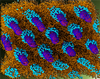
Lyotropic phase transitions of lipids studied by CG MD simulation and experimental techniques
Syma Khalid (Investigator), Josephine Corsi
A study of the phase behaviour of cationic lipid - DNA complexes such as those used for transfection by coarse grained molecular dynamics simulation. Lipid systems studied include DOPE, DOPE/DNA and DOPE/DOTAP/DNA. Structural parameters and phase behaviour observed computationally have been compared with those gained using Small Angle X-ray Scattering (SAXS) and polarising light microscopy techniques.
Multiscale modelling of biological membranes
Jonathan Essex (Investigator), Mario Orsi
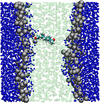
Biological membranes are complex and fascinating systems, characterised by proteins floating in a sea of lipids. Biomembranes, besides being the fundamental structures employed by nature to encapsulate cells, play crucial roles in many phenomena indispensable for life, such as growth, energy storage, and in general information transduction via neural activity. In this project, we develop and apply multiscale computational models to simulate biological membranes and obtain molecular-level insights into fundamental structures and phenomena.
Simulation of biological systems at long length and distance scales
Jonathan Essex (Investigator), Kieran Selvon
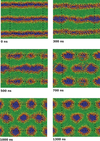
This project aims to shed light on cell membrane mechanisms which are difficult to probe experimentally, in particular drug permiation across the cell membrane. If one had a full understanding of the mechanism, drugs could be designed to target particular embedded proteins to improve their efficacy, the viability of nano based medicines and materials could also be assessed, testing for toxicity etc.
Using Molecular Dynamics to Understand the Antibacterial Mechanisms of Daptomycin & Chlorhexidine to Target the Bacterial Membrane
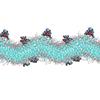
This project aims to use molecular dynamics techniques to understand how antimicrobial peptides, daptomycin and chlorhexidine, disrupt both gram positive and negative cell membranes on an atomic level.
Using Molecular Dynamics to Understand the Antibacterial Mechanisms of Daptomycin & Chlorhexidine to Target the Bacterial Membrane
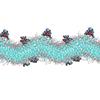
This project aims to use molecular dynamics techniques to understand how antimicrobial peptides, daptomycin and chlorhexidine, disrupt both gram positive and negative cell membranes on an atomic level.
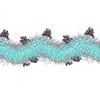
Using Molecular Dynamics to Understand the Antibacterial Mechanisms of Daptomycin & Chlorhexidine to Target the Bacterial Membrane
Syma Khalid (Investigator), Eilish McBurnie
This project aims to use molecular dynamics techniques to understand how antimicrobial peptides, daptomycin and chlorhexidine, disrupt both gram positive and negative cell membranes on an atomic level.
People
 Seth Bullock
Professor, Electronics and Computer Science (FPAS)
 Jonathan Essex
Professor, Chemistry (FNES)
 Hans Fangohr
Professor, Engineering Sciences (FEE)
 Lindy Holden-Dye
Professor, Biological Sciences (FNES)
 Peter Horak
Reader, Optoelectronics Research Centre
 Vincent O'Connor
Reader, Biological Sciences (FNES)
 Tiina Roose
Reader, Engineering Sciences (FEE)
 Paul Skipp
Reader, Biological Sciences (FNES)
 Robert Ewing
Senior Lecturer, Biological Sciences (FNES)
Srinandan DasmahapatraLecturer, Electronics and Computer Science (FPAS)
 Ian Hawke
Lecturer, Mathematics (FSHS)
 Syma Khalid
Principal Research Fellow, Chemistry (FNES)
 Philip Williamson
Senior Research Fellow, Biological Sciences (FNES)
 Stuart Bartlett
Postgraduate Research Student, Electronics and Computer Science (FPAS)
 Ioannis Begleris
Postgraduate Research Student, Engineering Sciences (FEE)
 Rory Brown
Postgraduate Research Student, Civil Engineering & the Environment (FEE)
 Paul Chambers
Postgraduate Research Student, Engineering Sciences (FEE)
Caroline DuignanPostgraduate Research Student, Biological Sciences (FNES)
 Joseph Egan
Postgraduate Research Student, Mathematics (FSHS)
 Robert Entwistle
Postgraduate Research Student, Engineering Sciences (FEE)
 Ric Gillams
Postgraduate Research Student, Chemistry (FNES)
 Stephen Gow
Postgraduate Research Student, Engineering Sciences (FEE)
 Joshua Greenhalgh
Postgraduate Research Student, Engineering Sciences (FEE)
 James Harrison
Postgraduate Research Student, Engineering Sciences (FEE)
 Tom Hebbron
Postgraduate Research Student, Electronics and Computer Science (FPAS)
Harry LPostgraduate Research Student, Biological Sciences (FNES)
 David Lusher
Postgraduate Research Student, Engineering Sciences (FEE)
 Alvaro Perez-Diaz
Postgraduate Research Student, Engineering Sciences (FEE)
 Can Pervane
Postgraduate Research Student, Electronics and Computer Science (FPAS)
 Craig Rafter
Postgraduate Research Student, Engineering Sciences (FEE)
 Hossam Ragheb
Postgraduate Research Student, Engineering Sciences (FEE)
 Kieran Selvon
Postgraduate Research Student, Engineering Sciences (FEE)
 Ashley Setter
Postgraduate Research Student, Engineering Sciences (FEE)
 Jonathon Waters
Postgraduate Research Student, Engineering Sciences (FEE)
 Thorsten Wittemeier
Postgraduate Research Student, Engineering Sciences (FEE)
 Emanuele Zappia
Postgraduate Research Student, Engineering Sciences (FEE)
Matthew HigginsUndergraduate Research Student, Biological Sciences (FNES)
 Elena Vataga
Technical Staff, iSolutions
 Petrina Butler
Administrative Staff, Research and Innovation Services
 Susanne Ufermann Fangohr
Administrative Staff, Civil Engineering & the Environment (FEE)
 Josephine Corsi
Alumnus, University of Southampton
 Richard Edwards
Alumnus, University of New South Wales, Australia
Ben IentAlumnus, Biological Sciences (FNES)
 Jan Kamenik
Alumnus, University of Southampton
Kieren LythgowAlumnus, Health Protection Agency
Nicolas PalopoliAlumnus, Biological Sciences (FNES)
Mario OrsiExternal Member, Queen Mary University of London
Eilish McBurnieNone, None